When people decide to donate tactical gear for Israel, the instinct is good: move fast, send what protects lives, help now. But urgency without coordination can create friction at the exact moment frontline teams need clarity, speed, and reliable equipment. In a high-stakes environment, what matters is not only generosity. It is whether the gear is needed, compliant, usable, and deployable right away.
That is the difference between a donation that saves time and one that consumes it.
What it really means to donate tactical gear for Israel
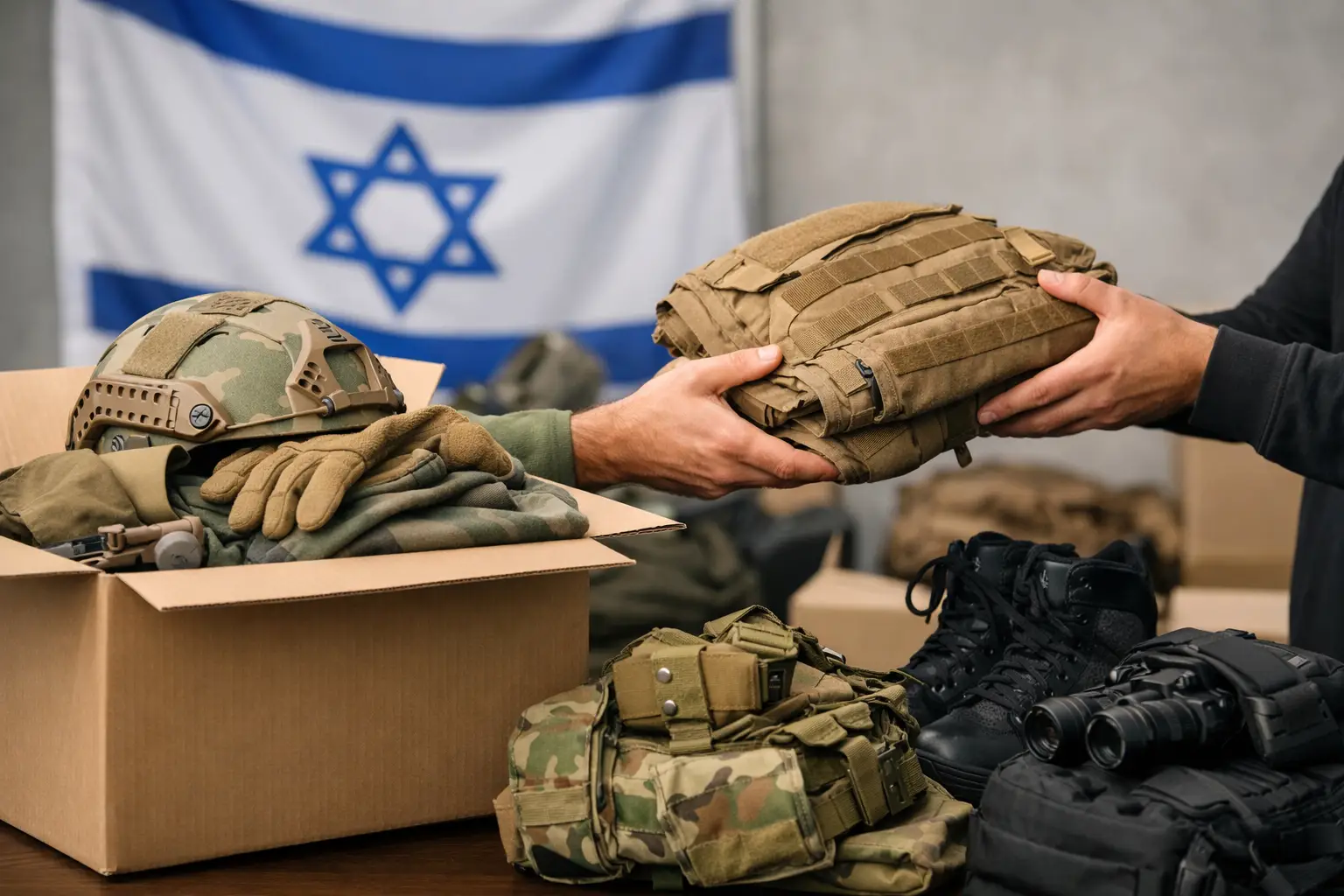
Tactical gear is not a vague category. It includes mission-critical equipment that serves a specific operational purpose under specific field conditions. Depending on the moment, that may mean ballistic helmets, plate carriers, IFAK kits, uniforms, ballistic eyewear, thermal tools, communications support, drones, or surveillance systems. It may also mean replacement gear for units under strain, protective equipment for civilian responders, or trauma-response tools for communities operating under threat.
The key point is simple: demand changes quickly. A warehouse full of gear that does not match current operational needs is not a win. A smaller, precise shipment that reaches the right hands at the right time often has more impact.
That is why serious support starts with discipline. The question is not just, “What can I send?” It is, “What is needed now, and how can I help deliver it without delay?”
Why direct gear donations are not always the fastest option
Many donors assume sending physical gear is the most direct path to impact. Sometimes it is. Often, it is not.
Field needs can shift between the moment a donor packs equipment and the moment it arrives. Items may face customs issues, import restrictions, specification mismatches, or compatibility problems with what units are already using. Even high-quality gear can become a logistical burden if it arrives without verification, documentation, or a clear receiving channel.
There is also the issue of standards. Protective equipment is not helpful just because it looks tactical. Helmets, vests, medical kits, and communications tools need to meet real performance requirements. In some cases, used gear is acceptable. In others, it is not. Medical items may be expired. Ballistic protection may be compromised. Electronics may not integrate with field systems. The stakes are too high for guesswork.
That is why high-impact organizations use a define, source, deliver model. They identify the need on the ground, verify the specification, source vetted solutions, and move them through trusted channels. It is faster because it avoids waste.
The most effective way to help depends on the gear
If you want to donate tactical gear for Israel, the right approach depends on what you are offering.
If you are an individual with a few items, cash support is often more effective than shipping gear independently. Funds can be converted into vetted, field-approved equipment and delivered where it is needed most. This avoids the lag and uncertainty that come with one-off shipments.
If you are a manufacturer, distributor, or large-volume supplier, direct equipment support may be extremely valuable. But scale does not remove the need for coordination. It raises it. Bulk donations need vetting, logistics planning, and a clear understanding of current demand.
If you represent a synagogue, school, business, or community campaign, your strongest move may be to fund a targeted protective package rather than collect miscellaneous items. A campaign built around specific deliverables gives donors confidence and gives operators what they can actually use.
This is where disciplined nonprofit execution matters. Groups built for rapid response can turn donor intent into field-ready outcomes with less delay and less confusion.
What qualifies as useful tactical support
Useful support is defined by mission need, not donor preference. That sounds obvious, but it is where many efforts go off course.
A high-impact donation is usually one of two things: either a verified item that meets current operational standards, or flexible funding that allows trusted partners to procure exactly what is needed. Both can save lives. Both require accountability.
On the gear side, protective and response-focused equipment tends to matter most. Ballistic protection, trauma kits, weather-appropriate uniforms, durable communications accessories, and situational-awareness tools can all make a measurable difference when sourced correctly. Technology can matter just as much as wearables. Drones, thermal cameras, and surveillance systems can improve detection, response time, and force protection.
But there is a trade-off. Specialized tools usually require more vetting, more training, and more coordination. The more technical the equipment, the less room there is for improvisation.
That is why disciplined organizations do not treat every donation the same. They separate good intentions from operational usefulness.
Common mistakes donors should avoid
The first mistake is sending gear before confirming that it is wanted. That can slow down receiving teams and create sorting work during a crisis.
The second is assuming any military-style item has tactical value. Appearance is not performance. Protective claims, condition, and compatibility matter.
The third is overlooking trauma care. Some donors focus only on visible protective gear, but trauma response is part of the same mission. A defender or civilian under threat needs protection before an incident and medical support after one. Fast-access treatment, field care, and PTSD recovery are not separate from the security picture. They are part of it.
The fourth is donating through channels that cannot verify delivery or impact. In a crisis, speed matters. So does traceability. Donors deserve to know that support moved from need identification to sourcing to delivery without getting trapped in bureaucracy.
How serious donors think about impact
The best donors do not just ask whether their gift was received. They ask whether it changed the outcome.
That means looking beyond the emotional satisfaction of sending something tangible. A helmet in the wrong spec, a vest in the wrong size range, or a medical kit that cannot be fielded quickly may feel concrete, but it does not necessarily create operational value.
By contrast, a coordinated funding push can equip multiple units, replenish depleted medical supplies, or accelerate trauma treatment for civilians and defenders who need care immediately. The impact is not less real because the donor did not box the item themselves. Often it is more real because the support was targeted.
This is the mindset behind agile nonprofit action. It favors speed, fit, and measurable outcomes over symbolic gestures.
When physical gear donations make sense
There are cases where direct equipment donations are exactly the right call. If you have access to new, high-demand equipment from a vetted source, and the receiving organization has confirmed the specification and route, the process can move efficiently. This is especially true for larger institutional donors, manufacturers, and supply-chain partners who can provide documentation, product details, and fulfillment support.
In those situations, donated gear can close dangerous gaps quickly.
But even then, discipline is everything. The donation should match a defined request. It should move through trusted logistics. And it should be handled by operators who know the difference between a useful shipment and a headline.
That is the standard mission-driven groups hold. Israel Friends, for example, has built its approach around urgent needs, vetted sourcing, and direct delivery because lives depend on execution, not theater.
What to do if you want to act now
Start by resisting the urge to self-deploy a solution. The fastest move is usually to connect with a trusted organization that already works with field partners, health agencies, local responders, and vetted vendors. Ask what is needed now. Ask whether equipment, funding, or campaign support will move faster. Ask how impact is verified.
If you are part of a community, organize around outcomes rather than objects. Funding a set number of helmets, vests, IFAK kits, or trauma-response interventions is cleaner and more effective than collecting random gear. If you are a business owner or entrepreneur, think like an operator. What can you mobilize quickly – capital, inventory, logistics, or network reach?
The right support is not the loudest support. It is the support that arrives ready to serve.
People who want to donate tactical gear for Israel are responding to a real need. That instinct matters. Pair it with precision, and your support can do more than express solidarity. It can protect a responder, strengthen a community under threat, and help put life-saving equipment exactly where it belongs.