
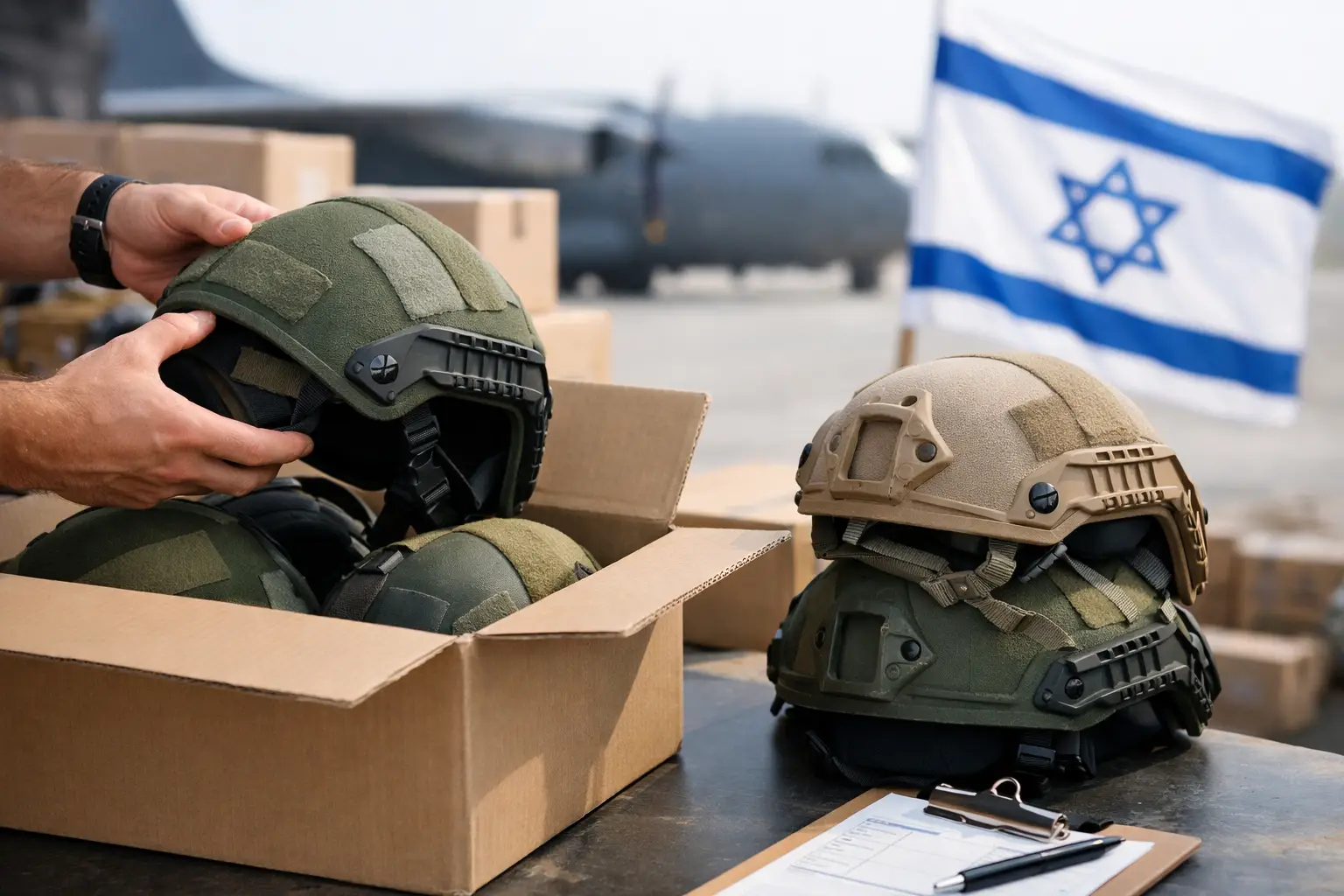
A helmet sounds simple until you try to get one into the right hands at the right time. That is the real challenge behind how to donate helmets to Israel. In high-risk environments, speed matters, but so do standards, logistics, export rules, and field suitability. A well-meant donation can protect a life. The wrong item, sent the wrong way, can sit in storage, miss the need window, or never be deployed at all.
That is why helmet donations should be treated like operational support, not casual charity. The goal is not just to give gear. The goal is to deliver usable protection that matches real needs on the ground.
How to donate helmets to Israel the right way
Start with one principle: need should drive the donation, not the inventory sitting in your garage or warehouse. In active security and emergency settings, helmets are not generic. Teams may need ballistic helmets, search-and-rescue helmets, wildland firefighting helmets, medical response helmets, or industrial head protection for specific civilian response work. Each use case has different performance standards, fit requirements, and acceptance criteria.
That means the smartest first move is not shipping. It is verification. Before you buy or collect anything, confirm what type of helmet is needed, in what quantity, on what timeline, and for which end users. If the request is for frontline protective gear, details matter. Ballistic rating, condition, manufacturer, age, suspension system, rails, mounts, and certification can all affect whether the helmet is field-ready.
This is where many donors lose time. They focus on generosity first and compatibility second. In crisis support, compatibility comes first. Generosity follows through precision.
New helmets usually outperform used donations
Many people asking how to donate helmets to Israel assume collecting used helmets is the fastest option. It can be, but only in limited cases. For most protective use, new helmets sourced through vetted channels are more effective than donated secondhand gear.
Used helmets raise obvious questions. Has the shell taken impact? Has it been stored in extreme heat? Is the liner degraded? Is the model still within service life? Are there cracks, missing pads, or modified components? A helmet can look intact and still fail when needed most.
For ballistic gear, this becomes even more serious. Age, undocumented use, and storage history all matter. Some organizations will not deploy used ballistic helmets at all because the risk is too high and inspection standards are difficult to enforce at scale. That does not mean every used helmet is worthless. It means donor intent has to be matched with real-world acceptance standards.
If your goal is immediate protective impact, funding the purchase of approved helmets through trusted sourcing channels is often faster and more reliable than trying to donate old equipment. It also allows field teams to standardize gear, streamline distribution, and avoid sorting through unusable donations during an active need cycle.
What makes a helmet donation usable
A usable helmet donation usually meets five tests. It fits a current operational need. It comes from a reputable manufacturer. Its condition can be verified. It complies with relevant standards for the intended role. And it can be delivered through a channel that knows who will receive it and how quickly it can get there.
That may sound strict, but it is exactly the point. Protective gear is only helpful when it is deployable.
Donating gear versus funding procurement
There are two main ways to help. You can donate physical helmets, or you can fund helmet procurement. Both can work, but they are not equal in every situation.
Physical gear donations make sense when a donor has access to new, documented, mission-appropriate helmets in quantity. This sometimes applies to manufacturers, distributors, corporate partners, security suppliers, or organizations with surplus inventory that meets current standards. In those cases, donating products directly can move quickly if there is already a receiving partner prepared to inspect and distribute them.
Funding procurement is often better for individual donors and families. It cuts out guesswork, avoids freight complications, and gives field operators the freedom to buy the exact models they need from approved vendors. That means fewer delays, less waste, and stronger accountability.
This is one of the trade-offs worth stating clearly. Donating the object feels tangible. Funding the right procurement is often more effective.
Compliance is not red tape for its own sake
Anyone serious about how to donate helmets to Israel should expect legal and logistics questions. Some protective equipment categories may involve export controls, customs review, end-use verification, or additional documentation. Rules vary depending on the helmet type, country of origin, destination, and shipping method.
This is not a side issue. It is a core part of getting support where it belongs. If a donor ignores compliance, the gear may be delayed, rejected, or redirected into administrative review while urgent needs continue.
That is why experienced nonprofits and operational partners work through vetted procurement and delivery systems. They define the need, source qualified equipment, and deliver through channels that can actually clear the process. Fast execution is not reckless execution. It is disciplined speed.
Questions every donor should ask first
Before moving money or product, ask a few direct questions. What type of helmet is needed right now? Are new or used units acceptable? What certifications are required? Can the receiving organization confirm end users? Who handles freight, customs, and final delivery? And if physical donations are not ideal, can the contribution be redirected into helmet purchasing for the same mission?
Those questions protect your impact. They also protect the people who may rely on that gear.
Why local sourcing can be the fastest path
Donors often assume the best way to help is to buy in the US and ship overseas. Sometimes that works. Sometimes it creates extra delay. Depending on inventory, regulations, and urgency, local or regional sourcing may be the smarter move.
If a trusted partner can procure approved helmets closer to the point of use, the result may be faster delivery, easier compliance, and better fit with operational requirements. It can also reduce freight costs and simplify replacement if quantities need to scale quickly.
For donors, this requires a shift in mindset. The win is not seeing your exact package arrive. The win is getting the right helmet to the right person without losing days to avoidable friction.
Corporate donors can do more than write a check
Manufacturers, distributors, and business owners have a different lane of impact. If you work in tactical equipment, industrial safety, emergency response supply, or logistics, your contribution may go beyond cash.
A company may be able to release new inventory, negotiate expedited production, provide documentation, assist with quality verification, or underwrite shipping and warehousing. That kind of support can compress timelines dramatically. In urgent operations, supply chain help is not secondary to the mission. It is part of the mission.
This is where an action-driven organization can make the difference between a pledge and a delivery. When there is a clear define-source-deliver process, corporate support becomes measurable instead of symbolic.
Avoid the most common donation mistakes
The biggest mistake is sending first and asking questions later. Close behind that are donating damaged or expired gear, assuming all helmets serve the same function, and overlooking the receiving organization’s actual capacity to inspect and distribute the shipment.
Another common problem is fragmented giving. Ten donors each sending small, mismatched batches may create more sorting work than usable protection. Pooled funding or coordinated procurement usually produces better outcomes. Standardization matters in the field. It improves training, fit, maintenance, and redeployment.
There is also an emotional trap here. People want to act immediately, especially when headlines are painful. That instinct is honorable. But urgency without coordination can cost time. The strongest support channels emotion into execution.
If you want your donation to protect lives
The best answer to how to donate helmets to Israel is not complicated, but it is disciplined. Confirm the need. Match the helmet type to the mission. Prioritize new, verifiable gear when protection standards are high. Respect compliance. Work through trusted operators who can source, clear, and deliver fast.
For many supporters, the most effective move is to fund organizations that already have ground intelligence, vendor relationships, and delivery infrastructure. That model reduces waste and increases the odds that your support becomes deployed protection instead of idle inventory. For others, especially business donors with relevant inventory or logistics capacity, coordinated in-kind support may be the right fit.
At Israel Friends, that operating mindset is simple: move fast, stay accountable, and focus on what reaches people in time to matter. If your goal is to help protect defenders and civilians, treat every helmet donation as a mission decision.
A good donation feels generous. A great one arrives ready for use when someone cannot afford to wait.