A camera that spots movement 30 seconds earlier can be the difference between a close call and a mass-casualty event. That is why surveillance systems for border communities are not a luxury item or a back-office upgrade. In high-risk areas, they are part of the life-saving chain that starts with detection, moves to verification, and ends with a faster protective response.
For families living near volatile borders, the threat is not theoretical. It can arrive in darkness, in rough terrain, through blind spots, or during the confusion of a rocket alert when attention is already split. Communities in these environments need more than a few security cameras mounted on poles. They need layered systems that can see farther, work at night, hold up under pressure, and feed clear information to the people making decisions in real time.
What surveillance systems for border communities actually need to do
The first job is early warning. If a system only records what happened after an intrusion, it failed the mission. Border-area surveillance has to detect movement at distance, distinguish between routine activity and a real threat, and get that information to responders fast enough for them to act.
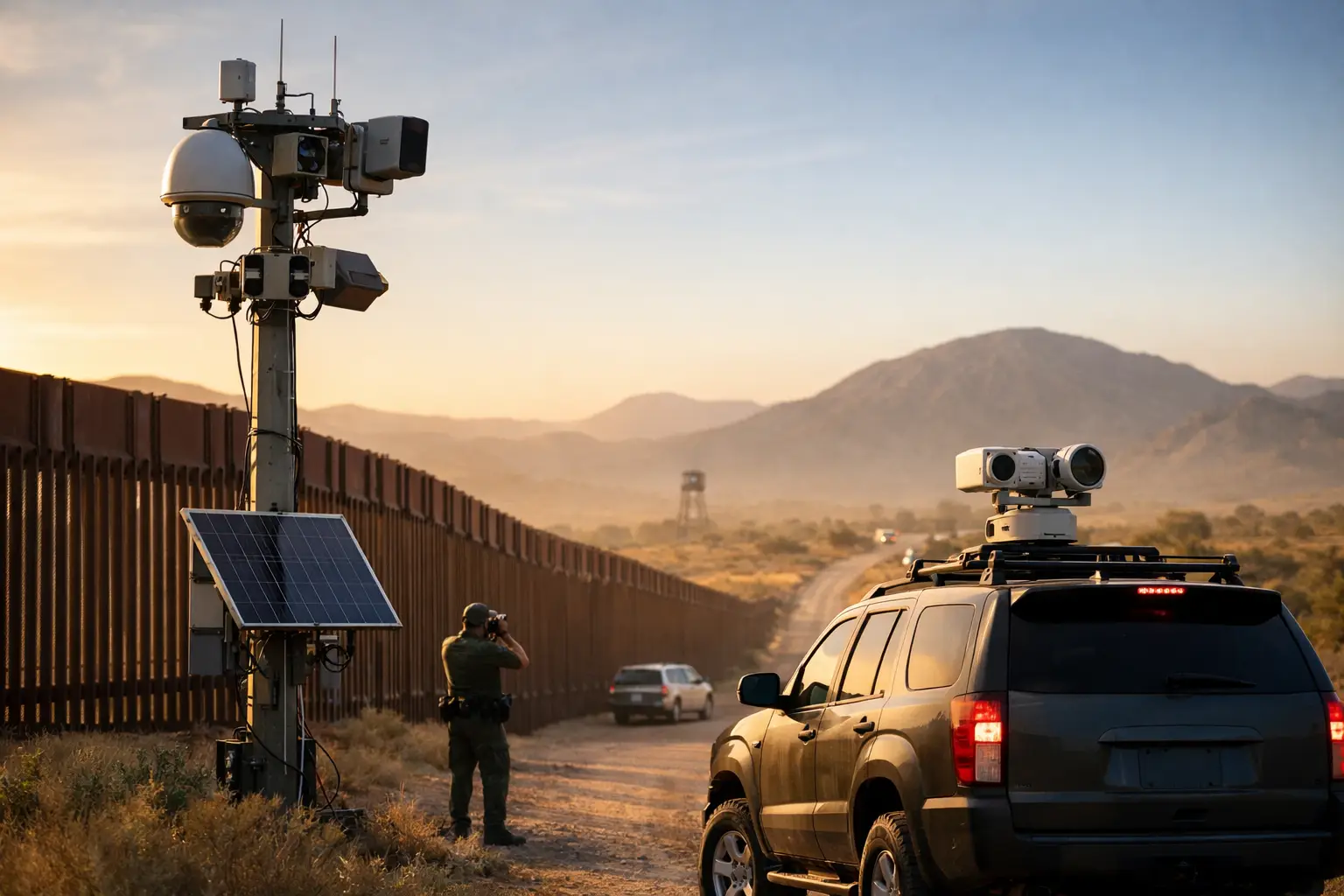
The second job is clarity. False alarms drain attention, wear down volunteers, and slow response when seconds matter. A useful system reduces noise. That usually means combining different tools rather than relying on a single camera type. Thermal imaging may catch heat signatures at night, while visible-light cameras help verify what is actually moving. Radar, motion analytics, and drone support can add another layer where terrain creates gaps.
The third job is durability. Border communities face dust, heat, rain, power disruptions, and deliberate attempts to disable equipment. Hardware needs to keep working in harsh conditions. Backup power, secure mounting, encrypted transmission, and redundant coverage matter just as much as image quality.
Why one camera network is not enough
A common mistake is treating surveillance like a retail security install. Put up cameras, add a monitor, and assume coverage is solved. That approach may work for parking lots. It does not work for perimeter defense in exposed communities.
Effective surveillance systems for border communities are built in layers. Outer detection zones identify movement before a person reaches homes, roads, schools, or community centers. Mid-range systems help track direction and pace. Inner-ring cameras cover gates, approaches, and likely entry routes. When each layer supports the next, responders gain time, and time is the most valuable asset in any attack scenario.
Terrain changes everything. A flat open approach requires one kind of deployment. Tree cover, agricultural land, ridgelines, drainage channels, and scattered structures require another. The right system is never just about buying equipment. It is about matching technology to geography, threat pattern, and response capacity.
The strongest systems combine eyes, analytics, and people
Technology alone does not protect a community. It supports trained people who know what to look for and what to do next.
That is where many projects either succeed or stall. A community can install excellent thermal cameras and still underperform if feeds are not monitored consistently, alerts are not triaged properly, or local security teams do not have a clear escalation protocol. On the other hand, a disciplined team with the right systems can create a serious defensive advantage without wasting resources.
The most effective setups usually combine fixed thermal cameras, PTZ cameras for active tracking, secure communications, and a command structure that turns visual data into fast decisions. In some areas, drones extend visibility over dead ground or difficult terrain. In others, stationary systems do most of the work because airspace, weather, or budget constraints make constant drone use less practical.
That trade-off matters. Drones are powerful, but they require trained operators, maintenance, battery discipline, and clear operating rules. Fixed cameras offer continuous coverage but can leave blind spots if placement is poor. The answer is rarely either-or. It is usually a smart mix.
Speed matters more than gadget count
Supporters often ask what the best border surveillance package looks like. The honest answer is that the best system is the one that can be deployed fast, integrated well, and used correctly from day one.
There is a real temptation to overbuild. More platforms, more sensors, more dashboards. But complexity can become its own weakness, especially in communities that need immediate protection, not a year-long procurement cycle. A lean, proven system installed quickly can save lives sooner than an ambitious design stuck in planning.
That is why disciplined execution matters. Define the threat. Source vetted equipment. Deliver what can be fielded now. Then improve coverage in phases. In high-risk border zones, action beats delay every time.
How surveillance systems change response on the ground
When surveillance works, it changes behavior before an attack reaches its target. Security teams can move toward a point of concern instead of searching blindly. Civilian leaders can issue warnings with more confidence. Families gain precious minutes to shelter. Reinforcements can be directed with better information.
That operational shift is easy to underestimate. The goal is not only to capture evidence or create a sense of security. The goal is to reduce uncertainty. In a crisis, uncertainty slows decisions, increases exposure, and raises the odds of tragic mistakes.
A strong system can also lower the burden on exhausted local teams. Volunteers and first responders in border communities already carry enormous stress. Better visibility means fewer guesswork patrols, clearer handoffs, and stronger situational awareness during chaotic moments. It does not remove trauma, but it can reduce preventable vulnerability.
The funding question is really a priorities question
Surveillance systems cost money, and donors deserve honesty about that. Thermal cameras, secure networking, backup power, rugged mounts, integration, training, and maintenance are not small expenses. But the cost should be measured against the risk of leaving communities exposed.
There is also a difference between cheap and efficient. Cheap gear often fails when weather turns, power drops, or range demands increase. Efficient investment means choosing equipment that has been tested in real operational conditions and putting it where it creates the most protective value.
For mission-driven donors, this is where clarity matters. A funded surveillance project is not an abstract security expense. It is a concrete intervention with visible outcomes: wider coverage, earlier detection, faster alerts, stronger readiness, and a better chance of stopping violence before it reaches civilians.
That is the standard Israel Friends brings to protective technology – not buying for optics, but sourcing what communities can actually use under pressure.
Where surveillance fits in a larger protection strategy
No surveillance system can stand alone. Cameras do not replace medical kits, hardened infrastructure, trained security teams, resilient communications, or trauma care. They strengthen all of them by giving people earlier and better information.
That broader view matters because border defense is not a single product category. It is an ecosystem of preparedness. Detection supports response. Response supports survival. Survival support includes emergency medicine, evacuation capability, and recovery services for communities that live under repeated threat.
The strongest protection model treats surveillance as one essential layer in a wider mission to preserve life. That approach is more demanding, but it is also more honest. There is no magic device. There is disciplined preparation, smart technology, and the refusal to leave vulnerable people waiting.
What donors should look for in a surveillance project
A credible project should answer simple questions clearly. What threat is being addressed? What terrain is being covered? How quickly can the system be deployed? Who will operate it? What maintenance and training are included? How will success be measured?
If those answers are vague, the project is not ready. If they are concrete, donors can see exactly how their support translates into protection. That is especially important for people who want more than broad promises. They want to know that their giving moves through a direct line from need to equipment to operational impact.
In border communities, that direct line is not a branding exercise. It is a life-saving discipline.
The hardest truth is also the clearest one: communities under threat do not get to choose whether danger exists. They can only choose whether they will face it blind. When we help fund surveillance that detects sooner, verifies faster, and supports decisive response, we are not investing in hardware for its own sake. We are buying time for families, defenders, and first responders who may only get one chance to act.