
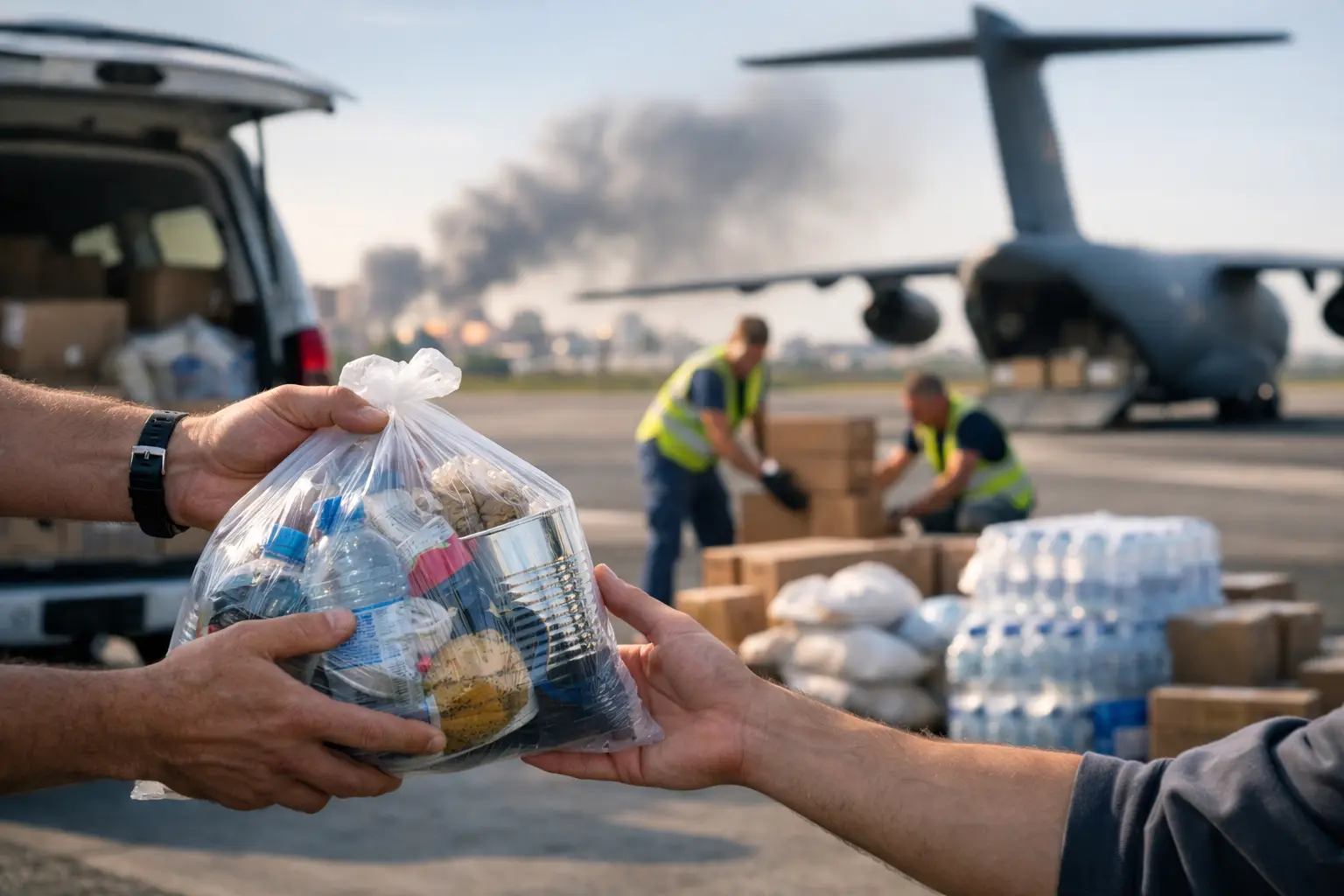
A donated dollar has no value sitting in a queue while a defender lacks an IFAK kit, a family needs trauma support, or a community faces a security gap. So, how fast can donations be deployed? The honest answer is: as fast as the organization can verify the need, secure the right solution, and get it into the right hands without sacrificing accountability.
In a real emergency, speed is not a slogan. It is the difference between equipment arriving before a mission and arriving after it is no longer useful. It is a trauma-care appointment made available now rather than after a civilian has spent weeks waiting. Rapid-response giving demands more than generosity. It demands an operating model built for action.
How Fast Can Donations Be Deployed When Every Hour Counts?
For urgent, clearly defined needs, donations can begin moving toward impact immediately. But deployment is not the same as a donation being processed. It is the full chain: identifying the need on the ground, confirming it through trusted partners, sourcing vetted equipment or care, coordinating delivery, and documenting the outcome.
Some needs can move faster than others. Funding for an established trauma-care partner may be activated quickly because the clinical pathway already exists. A request for a specialized thermal camera, drone system, or protective item may require procurement, inventory confirmation, export considerations, and secure delivery coordination. The right answer is never to rush the wrong item into the wrong place. The goal is disciplined speed.
At Israel Friends, rapid response follows a practical standard: define the need, source the solution, and deliver direct impact. That approach is designed to reduce the distance between a donor’s decision to act and a life-protecting result on the ground.
What Determines Donation Deployment Speed?
The fastest organizations do not improvise during a crisis. They build trusted relationships, supplier access, operational processes, and local coordination before the next emergency begins. Four factors usually determine how quickly donations can be deployed.
- A verified, specific need. A broad request for help takes time to translate into action. A confirmed request for 200 IFAK kits, emergency mental-health sessions, or ballistic eyewear can move much faster because the mission is clear.
- Reliable local coordination. Direct communication with defenders, local organizations, health agencies, resiliency centers, and trusted government partners prevents duplication and helps ensure aid reaches the people who need it.
- Vetted sourcing and available inventory. If a trusted vendor has the required equipment ready, deployment can accelerate. If an item must be manufactured, customized, or transported through restricted channels, timing changes.
- Accountable logistics. A fast response still needs purchase controls, delivery planning, recipient confirmation, and financial stewardship. Bureaucracy that adds no protection should be removed. Controls that protect donors and recipients must remain.
This is why two donations made on the same day may produce different timelines. A contribution to a ready-to-fund PTSD telehealth program may be put to work rapidly. A contribution toward advanced surveillance technology may require a longer procurement cycle, testing, and installation. Both can be urgent. Both can be high impact. They simply have different paths to deployment.
Speed Without Accountability Is Not Impact
Donors should be skeptical of vague claims that every gift is deployed instantly. Real crisis response has obligations: verify the need, confirm the recipient, source quality equipment, protect sensitive logistics, and ensure funds are used for their intended purpose.
The strongest rapid-response organizations make speed possible before a donation arrives. They know which vendors can supply mission-critical gear. They maintain working relationships with local partners. They understand what equipment is appropriate for the operational environment. They can distinguish between a visible request and a verified priority.
That preparation matters because urgency can create waste. A warehouse full of unneeded supplies is not a victory. Neither is sending equipment that cannot be used, maintained, or delivered securely. Effective deployment means delivering the right support at the moment it can protect a life, strengthen readiness, or help someone begin recovering from trauma.
For donors, this is the standard worth demanding: clear needs, credible partners, practical execution, and evidence that the response reached its intended destination.
The Difference Between Restricted and Flexible Giving
Donation structure also affects speed. A restricted gift is designated for a particular program, such as protective equipment, trauma care, or emergency civilian relief. This can create powerful, measurable impact because donors know exactly what their contribution is intended to support. It may also take longer to deploy if the designated need is still being assessed or if the required item has a longer sourcing timeline.
Flexible emergency funding often moves faster because it gives response teams room to direct resources to the most urgent verified need. When the situation changes by the hour, flexibility can help teams purchase available equipment, fund immediate care, cover delivery costs, or respond to an emerging gap without waiting for a new fundraising cycle.
Neither option is automatically better. Restricted giving works well when a donor is committed to a defined mission. Flexible giving is especially valuable when trusted teams on the ground must make fast decisions in a fluid environment. The key is alignment between the donor’s intent and the operational reality.
From Donation to Direct Impact
A well-run deployment process is not complicated in principle, even though the work behind it can be demanding. First, teams receive and verify a request. Next, they determine what will solve the problem, whether that is medical gear, protective technology, emergency supplies, or mental-health support. Then they source through trusted channels, coordinate delivery, and confirm the aid has reached the intended program or recipient.
The process becomes faster when these steps are connected instead of isolated. Fundraising cannot operate in one corner while procurement, field coordination, and delivery operate somewhere else. Donors deserve an organization that can convert support into action, not one that treats fundraising as the finish line.
Consider a defender who needs an individual first-aid kit. The response is not complete when money is raised. The kit must meet appropriate standards, be procured from a reliable source, get to the correct unit or recipient, and be ready for use. The same principle applies to trauma care. A donation becomes meaningful when it helps create timely access to qualified support for people carrying the psychological cost of conflict.
What Donors Can Do to Help Aid Move Faster
Donors can strengthen rapid deployment by supporting organizations that communicate in concrete terms. Look for named needs, defined programs, established operational relationships, and a clear explanation of how funds become action. Ask whether the organization can show the difference between raising money and delivering aid.
Consistency also matters. Emergency giving is essential, but recurring support gives response teams more room to prepare before a crisis peaks. It can help maintain supplier relationships, expand treatment capacity, fund readiness initiatives, and reduce the delays that occur when every urgent need depends on starting from zero.
Supporters can also multiply impact beyond a single contribution. Share a verified campaign with people who care about Israel’s security and resilience. Join a volunteer effort. Become an ambassador. Choose mission-supporting merchandise when it directly helps fund the work. A prepared network gives rapid-response teams more capacity to act when the next call comes.
Fast Deployment Is a Commitment Made Before the Emergency
The most meaningful answer to how fast donations can be deployed is not measured only in hours or days. It is measured in readiness. Are trusted partners already in place? Are solutions already vetted? Is there a team prepared to act when a request arrives? Can donors see where their support is going and why?
When lives are on the line, good intentions must become organized action. Give where urgency is matched by discipline, where compassion is backed by capability, and where a contribution is treated not as a transaction, but as a responsibility to protect.