A fence line at 2:00 a.m. looks quiet until it isn’t. Darkness hides movement, compresses reaction time, and turns seconds into risk. That is where thermal cameras for civilian protection stop being a nice upgrade and start becoming a life-saving layer of defense.
For communities under threat, visibility is not a technical detail. It is the difference between early warning and late response, between confusion and coordinated action, between people getting to shelter in time or being caught exposed. Thermal imaging matters because danger does not wait for daylight, and civilians should not be left blind when conditions are at their worst.
Why thermal cameras for civilian protection matter
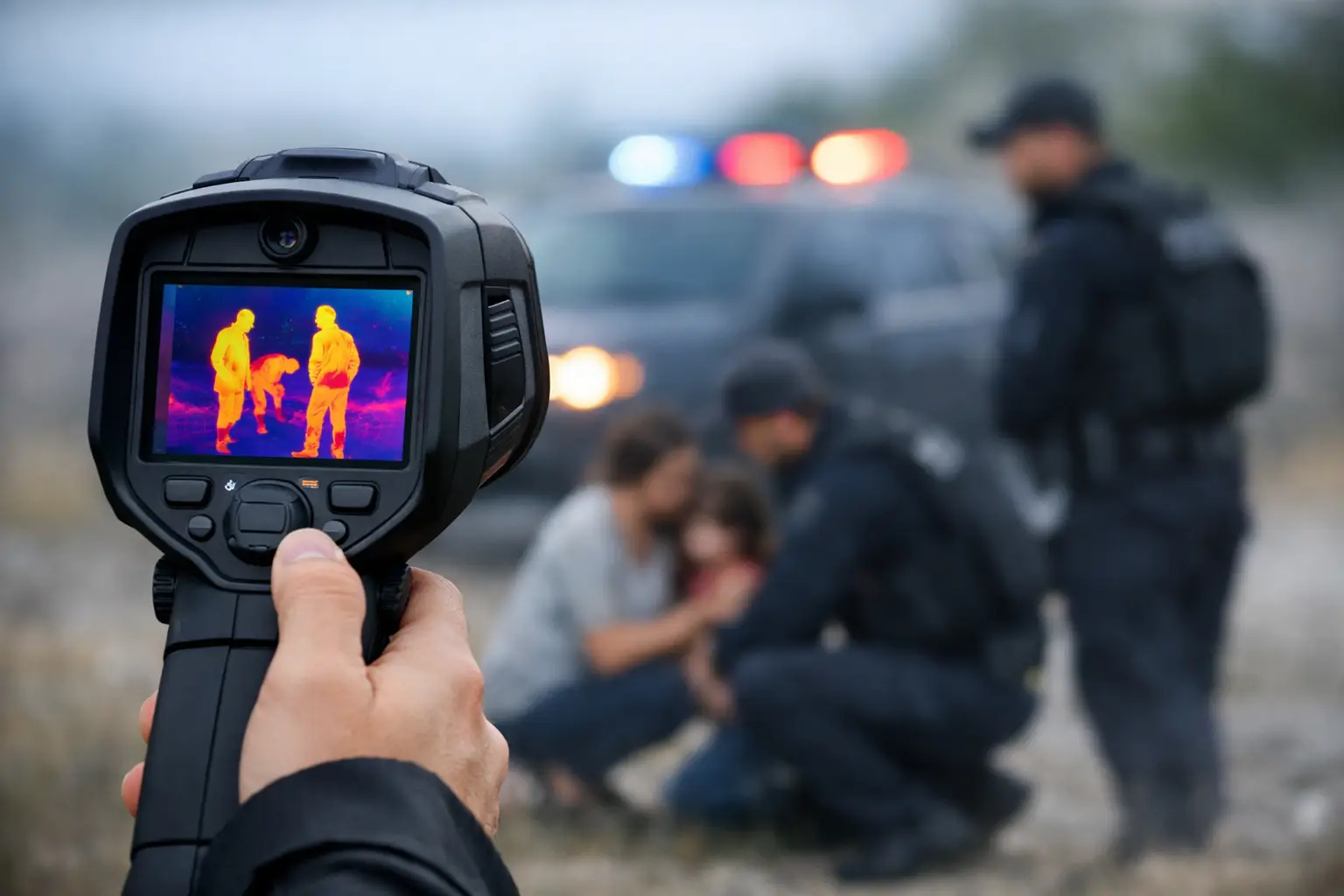
A standard camera depends on available light. If the area is dark, smoky, dusty, or partially obstructed, image quality falls fast. Thermal cameras work differently. They detect heat signatures, which means they can identify people, vehicles, and movement patterns even when the human eye and conventional optics struggle.
That advantage is practical, not theoretical. In high-risk civilian areas, threats often emerge at night or from low-visibility terrain. A thermal system can help security teams identify an approaching figure near a perimeter, track movement beyond a roadway, or confirm whether an alert is real before sending people into harm’s way. It gives decision-makers more time, and in crisis response, time is protection.
This is also why thermal technology belongs in the civilian conversation, not only in military or law enforcement settings. Families, schools, farms, border-adjacent neighborhoods, and emergency volunteers all face the same basic challenge – how to see danger early enough to act. The answer is not panic. It is preparedness built on tools that work under pressure.
What thermal cameras actually do in a civilian security system
Thermal cameras do not replace every other tool. They strengthen the whole system. Their job is to detect heat-based anomalies and movement, especially when traditional visibility is poor. That makes them valuable for perimeter monitoring, wide-area surveillance, and rapid verification during alarms.
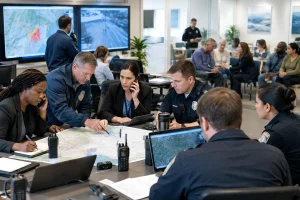
In practice, they are most effective when integrated into a layered response setup. A thermal camera identifies motion near a vulnerable approach. An operator verifies the heat signature. A local security team, responder, or community coordinator gets notified immediately. Residents receive direction faster. False alarms can be reduced, and real threats can be escalated without delay.
That sequence matters. A camera by itself does not protect anyone. A camera paired with trained observation, communication protocols, and a response plan can.
Detection is not the same as identification
This is one of the most important trade-offs to understand. Thermal cameras are excellent at detection. They can show that someone or something is present. They are not always as strong at identifying detailed visual features like clothing, facial characteristics, or license plate information.
That is why serious protection plans do not treat thermal imaging as a standalone answer. Thermal detects. Other systems may help classify, confirm, and document. When organizations spend wisely, they build around complementary strengths instead of expecting one piece of equipment to do everything.
Range, terrain, and environment change performance
Not every thermal camera performs the same way. Detection distance depends on sensor quality, lens configuration, mounting height, weather, and the size of the heat source. A system that works well for a compact residential perimeter may not be enough for open agricultural land or a large community boundary.
Environment matters too. Thermal imaging is strong in darkness, but it still has limits. Heavy rain, extreme heat differentials, dense clutter, and poor placement can affect performance. Good deployment starts with honest field conditions, not brochure promises.
Where civilian communities benefit most
The strongest use case is perimeter security in areas with elevated threat exposure. Thermal cameras can watch roads, fences, open fields, and blind spots where intrusions are most likely to happen under cover of darkness. That early alert capability can help local teams make decisions before a threat reaches homes, schools, or public gathering spaces.
They are also valuable during emergency response. After an incident, responders may need to locate people in low light, track movement near damaged infrastructure, or secure an area without exposing more civilians. In these moments, thermal imaging supports both protection and recovery.
There is a humanitarian dimension here that often gets missed. Civilian protection is not only about stopping hostile movement. It is also about reducing chaos. When security teams can see clearly, they issue better instructions. When alerts are verified quickly, communities avoid unnecessary panic. When response starts earlier, trauma can be reduced even when a threat cannot be fully prevented.
How to evaluate thermal cameras for civilian protection
The right question is not, what is the most advanced camera on the market? The right question is, what system fits the threat profile, terrain, and response capacity on the ground?
Start with coverage. A small entry point, a school approach, and a broad agricultural perimeter have different needs. Then consider who will monitor the feed and how alerts will be handled. If no one is available to interpret what the camera sees, expensive equipment can become passive infrastructure instead of active protection.
Resolution matters, but so does reliability. Sensor quality, false alarm filtering, weather resistance, power continuity, and integration with existing surveillance platforms all affect real-world value. A slightly less sophisticated system that is installed correctly, monitored consistently, and supported by a real response protocol will outperform a premium device sitting in the wrong place.
Budget discipline matters here as well. Mission-driven organizations and donors should think in terms of operational impact per dollar, not simply hardware prestige. The best investment is the one that closes an actual vulnerability and works when the pressure is on.
Why speed of delivery matters as much as the hardware
In stable environments, procurement delays are frustrating. In active threat environments, they are dangerous. Communities facing immediate risk do not have the luxury of waiting through long administrative cycles while exposure remains unchanged.
That is why execution matters. The path from need to deployment has to be short, disciplined, and accountable. Define the gap. Source vetted equipment. Deliver where it will have immediate protective value. That mindset is especially important with thermal systems, because their value is tied to timing. A camera installed after a wave of incidents may help later, but it does not protect the people who needed it last week.
This is where entrepreneurial nonprofit action can make a real difference. When support moves quickly and decisions stay close to field realities, protective technology stops being abstract fundraising language and becomes visible, measurable impact.
The donor case for thermal protection
Many supporters want to know exactly what their contribution changes. Thermal cameras offer a clear answer. They increase detection capability at night. They strengthen civilian preparedness. They give local teams actionable information sooner. They can help cover vulnerable approaches that would otherwise remain exposed.
That does not mean every site needs the same setup, and it does not mean technology alone solves insecurity. But for donors who care about practical, immediate protection, thermal systems are one of the clearest examples of targeted support with a direct operational use.
For organizations like Israel Friends, this kind of equipment fits a larger principle: protect life with tools that close urgent gaps now, not after layers of delay. The goal is not to fund gadgets. The goal is to put proven capabilities in the hands of people responsible for keeping civilians safe.
A smarter way to think about protection
The strongest civilian security plans are layered, disciplined, and realistic. They do not pretend any device can eliminate danger. They build margin where none existed before. Thermal cameras add that margin by extending visibility into the hours and conditions where threats often gain their advantage.
That is their real value. They help communities move from reacting in the dark to acting with earlier warning and greater control. When civilian lives depend on faster detection, better information, and tighter response, seeing heat in the dark is not a luxury. It is a serious form of protection.
The most responsible investment is the one that helps people see a threat sooner and get others to safety faster.