When a community has seconds to move people out of danger, locate an injured family, or identify a blocked evacuation route, information is not a luxury. It is protection. The most consequential AI trends in civilian protection are not about futuristic gadgets. They are about reducing the time between a threat, a decision, and life-saving action.
For civilians living under sustained security pressure, technology must work in the real world: during power interruptions, overloaded communications networks, crowded shelters, severe weather, and trauma. The standard is simple. Does it help trained people see more clearly, respond faster, and protect more lives without creating new risks?
AI trends in civilian protection are moving from data to action
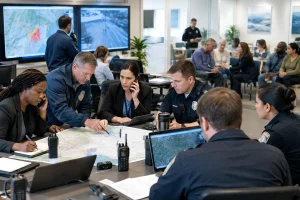
Artificial intelligence can process more inputs than any emergency operations team could review manually. Thermal feeds, surveillance cameras, drone imagery, public alerts, emergency calls, traffic data, and field reports can create a clearer operating picture. But speed alone is not enough. The value comes when that picture helps a responder make the right next move.
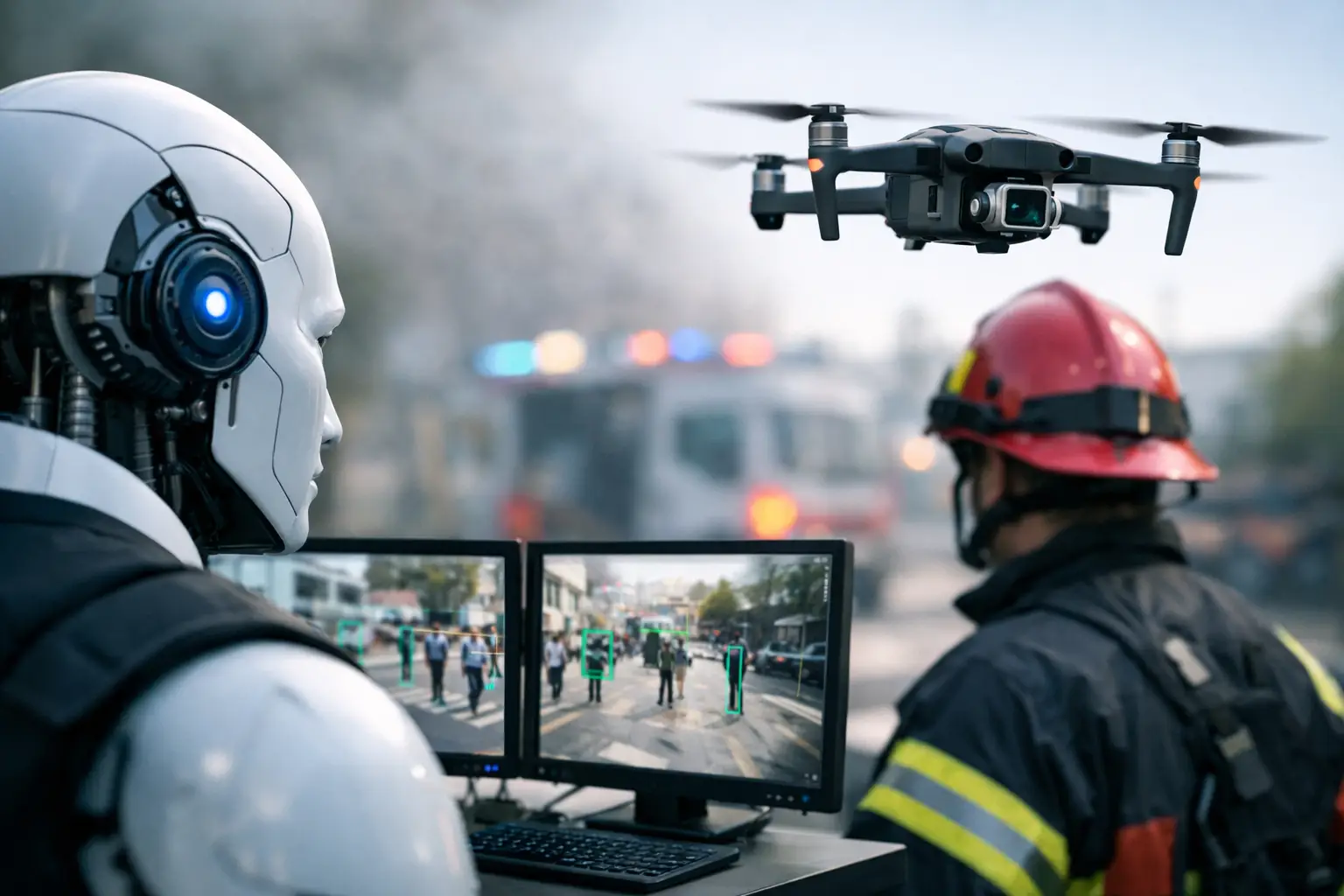
One major shift is AI-assisted threat detection. Computer vision systems can flag unusual movement near sensitive areas, identify potential fires or structural damage, and distinguish vehicles, people, and objects within a monitored zone. Thermal cameras can add critical visibility at night, through smoke, or during poor weather. Used responsibly, these tools help teams prioritize what needs human attention first.
This is not a replacement for human judgment. A system can flag a possible threat. A trained operator must assess context, verify the alert, and decide what response is lawful and appropriate. False positives can exhaust personnel and create panic. False negatives can leave people exposed. Effective protection requires calibrated systems, clear escalation protocols, and continuous review of what the technology gets right and wrong.
Faster alerts need better targeting
Mass notifications save lives when they are timely and clear. They can also become less effective when people receive vague alerts too often. AI is increasingly being used to improve the relevance of emergency communications by helping identify which neighborhoods, facilities, or transportation routes may be affected by a developing threat.
The practical goal is not to send more messages. It is to send the right message to the right people at the right moment. A family needs to know whether to shelter, evacuate, avoid a road, or seek medical help. Emergency teams need updates that are specific enough to guide deployment without exposing sensitive operational details.
Language matters here. In a crisis, instructions should be short, direct, and accessible to people with disabilities, seniors, children, and non-native speakers. AI-supported translation and voice tools can help extend reach, but every public alert should be reviewed against the reality on the ground. A technically accurate message that confuses frightened people has failed its mission.
Drones and computer vision can extend the reach of first responders
After an attack, disaster, or evacuation order, responders often face a basic problem: they cannot safely see where help is needed most. Drones equipped with thermal imaging and AI-assisted visual analysis can rapidly survey damaged areas, identify heat signatures, map blocked routes, and spot hazards that may slow rescue operations.
That can change how limited resources are deployed. Instead of sending a team into an unknown area with incomplete information, command staff can assess access points, possible casualties, damaged infrastructure, and developing risks before making the next decision. In remote communities or areas with disrupted roads, that time advantage may determine whether medical aid arrives in minutes or much later.
There are real constraints. Drones require trained pilots, maintenance, legal compliance, secure communications, and plans for interference or bad weather. AI analysis can help sort imagery, but it cannot guarantee that a heat signature is a person in need of rescue or that a clear-looking route is safe. The technology strengthens a response when it is part of a disciplined operational system, not when it is treated as a shortcut.
AI can make emergency logistics more precise
Civilian protection depends on the unglamorous work of getting the right supplies to the right location before they are needed. Trauma kits, protective equipment, batteries, medical supplies, communications gear, and shelter resources must be available where the risk is highest. During a fast-moving crisis, a warehouse full of equipment means little if it cannot be sourced, staged, and delivered quickly.
AI-assisted logistics can help organizations forecast demand, track inventory, identify supply gaps, and prioritize deliveries based on changing conditions. It can also support route planning when roads are congested, damaged, or unsafe. For mission-driven nonprofits and local partners, this means donors can potentially see a more direct line between urgent needs and delivered equipment.
The caution is equally clear: prediction models are only as useful as the data behind them. A model trained on ordinary demand may fail during an extraordinary emergency. Human teams must retain the authority to override automated recommendations based on local intelligence, community knowledge, and rapidly changing facts.
Trauma care is becoming more reachable, not less human
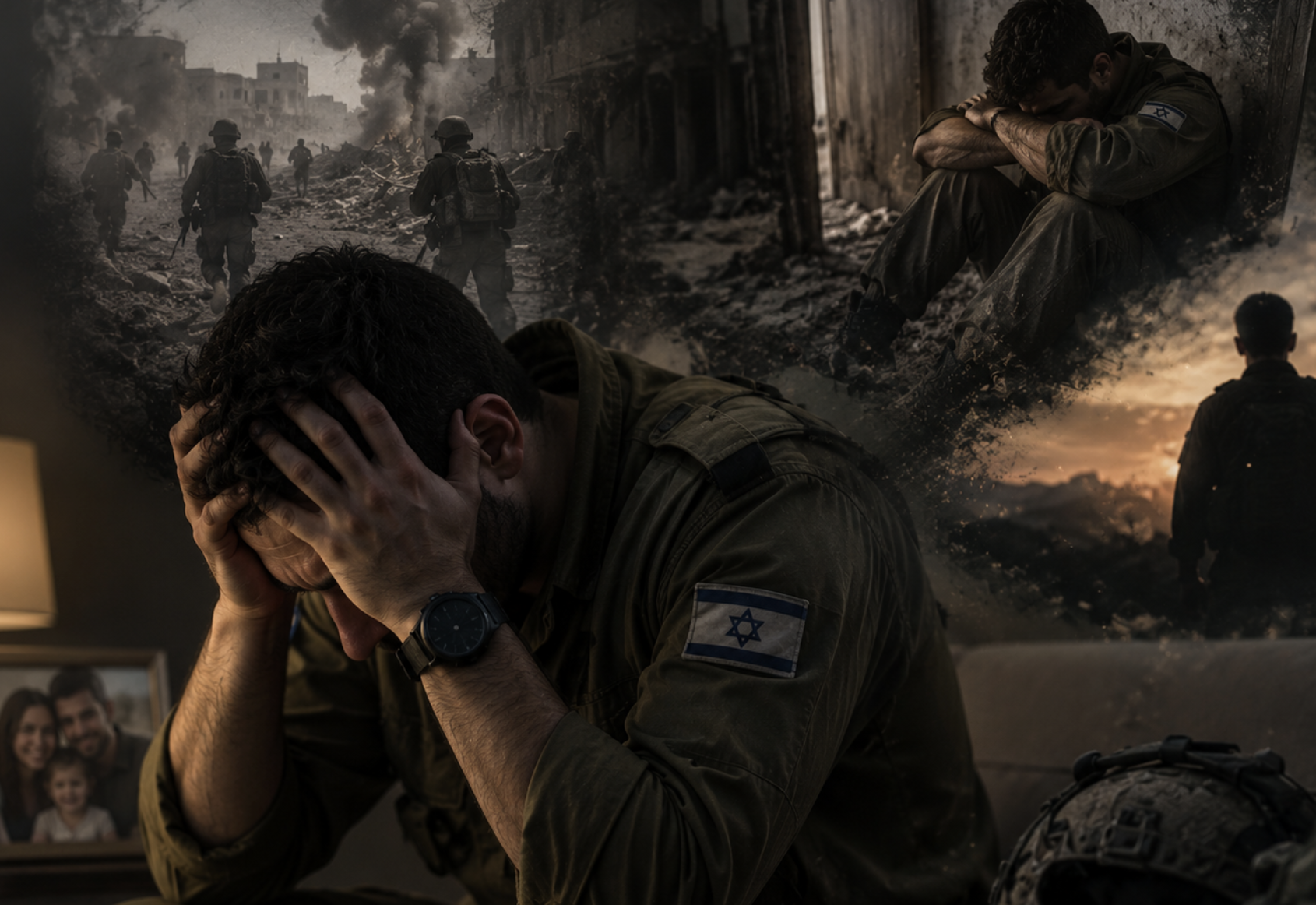
The effects of violence and displacement do not end when an alert stops. Civilian protection includes the difficult work of helping people regain stability after trauma. AI-supported screening tools, scheduling systems, and telehealth platforms can help care providers identify urgent needs, reduce administrative delays, and connect patients with qualified clinicians faster.
For someone experiencing acute stress, PTSD symptoms, grief, or sleep disruption, timely access to professional support can matter enormously. Technology may help triage requests, offer reminders, and make care more available to people outside major population centers. It can also help providers recognize patterns that signal a need for faster intervention.
But trauma care cannot be automated into a chatbot exchange. Privacy, clinical oversight, informed consent, and cultural sensitivity are nonnegotiable. AI should reduce barriers between a person and trusted professional care, not create distance between them. The best systems preserve human connection while making that connection easier to reach.
The security question: who controls the data?
Every protective technology creates a responsibility to safeguard the information it collects. Location data, medical information, images of homes, and reports from civilians can become dangerous if exposed, misused, or retained without a clear purpose. In high-risk environments, data security is itself a form of civilian protection.
Organizations deploying AI-enabled tools need clear rules: collect only what is necessary, limit who can access it, secure it in transit and at rest, set retention limits, and document who makes consequential decisions. They should test for bias, audit system performance, and establish a process for reporting errors. Communities deserve to know when technology is being used to protect them and what safeguards are in place.
This is where operational discipline matters. A fast response without accountability can lose public trust. Accountability without urgency can leave people waiting for help. The mission is to hold both standards at once.
What donors should look for in AI-enabled protection
Supporters should not be asked to fund technology because it sounds advanced. They should ask what concrete problem it solves, who will operate it, how success will be measured, and what happens when the system fails. Useful investments come with training, maintenance, secure deployment, and a plan for ongoing evaluation.
The strongest civilian protection programs connect technology to a defined outcome: earlier detection, safer evacuation, faster medical response, stronger situational awareness, or quicker access to trauma care. They also respect the people behind the data. Every camera feed may represent a family trying to get home safely. Every triage request may represent someone carrying an invisible injury.
Israel Friends approaches urgent protection needs with a practical standard: define the gap, source vetted solutions, and deliver them where they can make a measurable difference. Advanced tools matter because they can extend the reach of courageous responders and help civilians get through the next critical hour.
The future of civilian protection will not be decided by who adopts the most technology. It will be decided by who uses technology with speed, discipline, and moral clarity. Support the programs that keep people at the center, train teams to act under pressure, and turn better information into protection when it matters most.