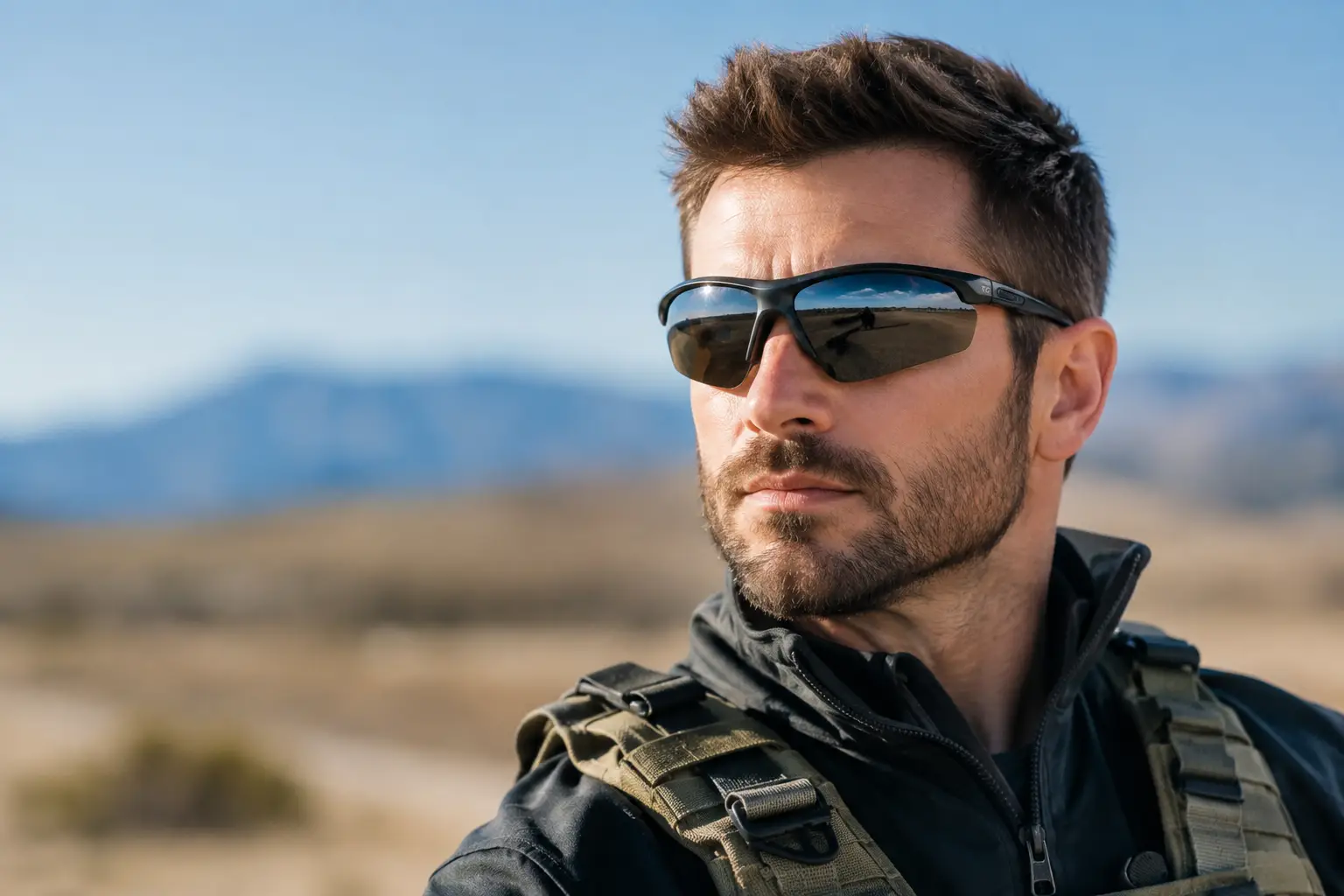
A defender cannot afford to lose visual clarity at the wrong second. Dust, debris, shattered material, wind, sweat, and fragments can turn a routine movement into a preventable injury. The best ballistic eyewear features are not cosmetic upgrades. They are a layered protection system built to preserve sight, awareness, and decision-making under pressure.
For donors and supporters who want to understand what mission-ready protective equipment actually does, ballistic eyewear is a clear example of why details matter. A low-cost pair of glasses may look tactical. It may even feel durable in the hand. But true protective eyewear must perform when impact, heat, prolonged wear, and fast movement all collide.
Best Ballistic Eyewear Features Start With Verified Protection
The first question is not whether eyewear looks strong. It is whether it has been tested to an appropriate ballistic standard. Protective eyewear should carry clear manufacturer documentation for its impact rating, rather than vague claims like “military style” or “impact resistant.”
In the United States, ANSI Z87.1 high-impact markings are common on protective eyewear. For ballistic use, many buyers also look for products tested to military ballistic requirements such as MIL-PRF-32432. These standards are not interchangeable, and neither label automatically makes a product right for every mission. What matters is understanding what the eyewear was tested to withstand, and confirming that the frame and lens configuration being issued matches the tested configuration.
That last point is often missed. A ballistic-rated lens paired with an untested aftermarket frame, clip, insert, or replacement part may not deliver the same protection. Mission equipment should be sourced as a complete, vetted system.
The Features That Matter in the Field
Ballistic protection is the baseline. The best eyewear must also help the wearer see clearly, keep it on their face, and continue performing through long operational hours.
Lens material and optical clarity
Polycarbonate is widely used in protective eyewear because it offers strong impact resistance at a low weight. Yet material alone is not enough. The lens should provide sharp, undistorted vision across the field of view. Distortion near the edges can affect depth perception, target identification, navigation, and vehicle operation.
Look for lenses with high optical quality and a shape that gives useful peripheral coverage. A wide field of view helps the wearer maintain awareness without constantly moving their head. That can matter in crowded environments, during vehicle operations, or when scanning uncertain terrain.
Lens thickness can contribute to protection, but thicker is not always better if it adds weight, distortion, or poor compatibility with other gear. The right balance depends on the tested system and intended use.
Coverage beyond the front of the eye
Threats do not always arrive straight ahead. Fragments, dust, and debris can enter from above, below, or the sides. A protective design should sit close enough to the face to reduce gaps while still allowing airflow and comfortable movement.
Wraparound eyewear provides broad coverage and works well for many active applications. Goggle-style systems can offer more complete sealing and coverage in heavy dust, wind, or debris. The trade-off is that goggles can trap more heat and humidity, increasing fog risk. There is no single correct shape for every assignment. The operating environment should drive the selection.
Anti-fog performance that survives real use
Fog is more than an inconvenience. It interrupts vision at the exact moment the wearer needs it most. A lens may perform well in a brief indoor demonstration and fail after an hour under a helmet, body armor, heat, sweat, and exertion.
Effective anti-fog protection usually combines a quality lens coating with practical ventilation and fit. Coatings can wear down, especially when cleaned with abrasive fabric or harsh chemicals, so field care matters. Some systems use ventilation channels or lens geometry to move air without creating large exposure gaps.
Before issuing eyewear at scale, test it in the conditions where it will actually be worn. A clear lens in an air-conditioned room is not proof of performance in heat, humidity, dust, or rapid temperature changes.
Secure retention and pressure-point control
Protective eyewear that slips during movement is not protective enough. Adjustable temples, low-profile straps, flexible nose pieces, and secure retention systems help keep the lens aligned with the wearer’s eyes.
Fit must account for helmets, communications headsets, hearing protection, and face coverings. Frames with thick or rigid temples may create painful pressure points beneath a helmet or earmuffs. Over time, discomfort becomes a safety issue because people remove gear that hurts.
The strongest choice is usually not the tightest frame. It is the one that stays stable during running, bending, and vehicle movement without causing hotspots during extended wear. Fit testing should include these movements, not just a few seconds in front of a mirror.
Lens options for changing light
Clear lenses remain essential for low-light conditions, indoor work, and nighttime operations. Tinted lenses can reduce glare in bright sun. Contrast-enhancing lens colors may help some wearers distinguish terrain or visual detail in specific conditions.
Interchangeable lens systems can be valuable when teams move between bright outdoor environments, buildings, and nighttime assignments. But they also introduce a logistics question: replacement lenses must be available, protected from scratches, and easy to change without damaging the frame. A simpler fixed-lens system may be the better operational choice if resupply is limited or users cannot maintain multiple components.
Photochromic lenses offer convenience by adjusting to changing light, but their transition speed and performance can vary by temperature and environment. They should be evaluated for the mission, not chosen simply because they sound advanced.
Compatibility Is a Protection Feature
A ballistic eyewear system does not operate alone. It must work with the rest of the protective loadout. Helmets can press frames downward. Respirators and face coverings can direct warm breath upward into lenses. Communications equipment can interfere with temple arms. Prescription needs can complicate everything.
For prescription wearers, a compatible prescription insert may be appropriate, but it must preserve fit and avoid excess fogging. Another option is purpose-built ballistic prescription eyewear from a qualified provider. Wearing ordinary prescription glasses beneath oversized protective eyewear can create discomfort, poor seal, or impact concerns depending on the system.
Field teams should assess eyewear while wearing the exact helmet, headset, face covering, and other gear they use. Compatibility testing prevents expensive equipment from becoming unused equipment.
Durability, Cleaning, and Replacement Matter
A lens that is scratched, crazed, cracked, deeply pitted, or difficult to see through is no longer mission-ready. Scratch-resistant coatings help extend service life, but no coating makes a lens indestructible. The organization issuing protective eyewear needs a simple process for inspection, cleaning, storage, and replacement.
Use approved cleaning methods from the manufacturer. Dry-wiping dust and grit across a lens can create scratches that scatter light and reduce clarity. Store eyewear in a protective pouch or case, not loose in a vehicle, pack, or pocket beside hard equipment.
This is where operational discipline protects donor impact. It is not enough to deliver equipment once. Teams need equipment that remains usable, replaceable, and correctly maintained. Israel Friends focuses on identifying urgent needs, sourcing vetted solutions, and helping get practical protective tools where they can make a direct difference.
Avoid the Common Buying Mistakes
The cheapest option is rarely the best value when eye protection is on the line. At the same time, the most expensive product is not automatically the right one. Buying should be driven by verified testing, actual fit, environmental needs, compatibility, and the ability to sustain the system over time.
Be cautious with vague ballistic claims, missing product markings, unknown sellers, and surplus gear with an unclear storage history. Heat, ultraviolet exposure, chemicals, and age can affect materials and coatings. If the source cannot verify what the product is, how it was tested, or whether replacement parts are authentic, it is not a dependable choice for high-stakes use.
A good procurement process asks direct questions: What standard was this complete system tested against? Which lens is supplied? Does it fit under the issued helmet and hearing protection? How does it resist fog? What is the replacement plan after damage or loss? Clear answers separate operational equipment from tactical-looking accessories.
Protect Sight Before the Moment of Impact
Ballistic eyewear earns its value before a threat ever appears. It lets a defender keep moving through dust, glare, wind, and uncertainty with clearer vision and fewer distractions. When protection is verified, fit is tested, and replacements are planned, eyewear becomes what it should be: quiet, reliable equipment that helps preserve the person wearing it.