
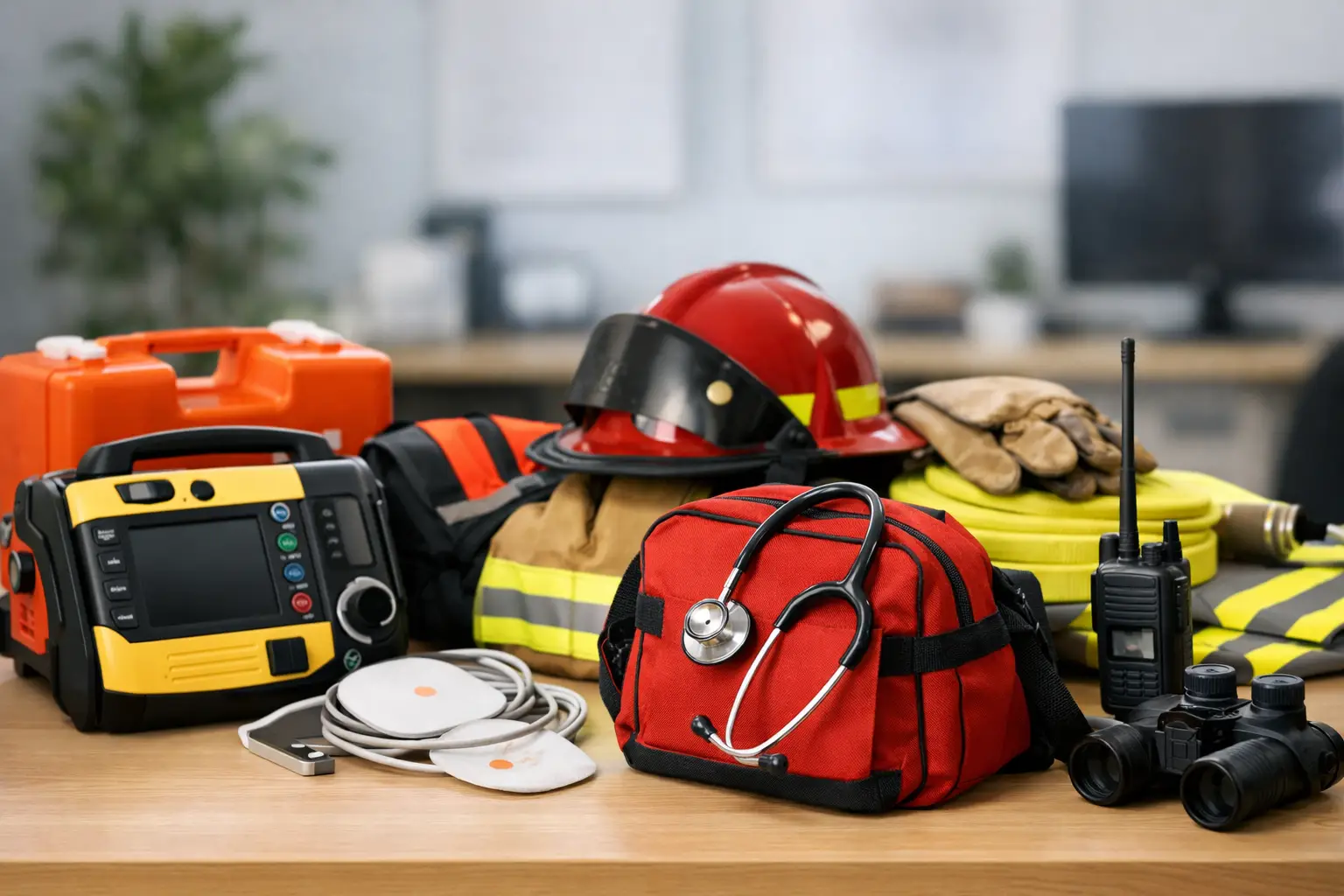
A request for emergency equipment is never just a request for gear. It may mean an IFAK kit that stops a preventable death, a thermal camera that identifies a threat before it reaches a community, or trauma care that helps a survivor function after the sirens stop. This guide to nonprofit emergency equipment funding is built for donors and mission leaders who want urgent support to become real protection, not a delayed promise.
The difference is execution. In a crisis, good intentions are not enough. Funding must move through a disciplined chain: define the operational need, verify the solution, source it through trusted channels, and deliver it to the people who will use it. Every unnecessary handoff costs time. Every unclear request risks wasted resources.
Start With the Mission-Critical Need
Emergency funding works best when the need is specific enough to act on immediately. “Support security” is a worthy goal, but it is not a procurement plan. A clear request identifies who needs the equipment, what problem it solves, how quickly it is needed, and what conditions it must withstand.
For frontline defenders, that may mean protective eyewear, medical kits, encrypted communications equipment, drones, or surveillance tools. For civilian communities, it may mean emergency medical supplies, thermal imaging, protective systems, or rapid-access mental health care. The right intervention depends on the threat, the terrain, and the people at risk.
A strong funding request answers practical questions before a donor has to ask them. How many units are needed? Who has validated the need? Is the equipment compatible with current systems? What is the delivery timeline? What training, maintenance, batteries, replacement parts, or clinical follow-up will be required?
Specificity does more than build donor confidence. It prevents a common failure in emergency giving: buying what sounds useful instead of what the field can deploy.
Fund Readiness, Not Just the Purchase
The purchase price is only one part of emergency equipment funding. A drone without batteries, operators, spare parts, or authorization may sit unused. A medical kit without replenishment supplies is a one-time intervention. A trauma-care program without a path to qualified treatment can leave people waiting when they need help most.
That does not mean every campaign must fund an entire long-term program. It means funders should understand what makes the initial investment operational. In some cases, the most effective gift is equipment. In others, it is delivery, installation, training, maintenance, or fast-access clinical support.
The best emergency organizations distinguish between immediate deployment and sustained capability. Both matter, but they should be communicated honestly. If a request funds a first wave of equipment, say so. If the next need is replenishment or expansion, show the next step. Clear scope protects trust and helps donors see exactly what their support makes possible.
Build a practical cost picture
A credible funding plan separates the core equipment cost from essential deployment costs. That may include vendor vetting, transport, protective packaging, import or compliance requirements, installation, training, and replacement components. For mental health response, it can include intake capacity, telehealth access, clinical staffing, and emergency follow-up.
Not every cost belongs in every appeal. But hiding the real cost structure creates friction later. Donors who care about impact usually appreciate a straightforward explanation of what it takes to get life-saving capability into service.
Verify Before You Mobilize Donors
Urgency is not a reason to lower standards. It is a reason to strengthen them.
Before launching an emergency equipment campaign, confirm the request with credible field partners, local leaders, government contacts, medical professionals, or security personnel who understand the operating environment. Verify the end user, the intended use, the delivery destination, and any legal or operational requirements. When equipment is sensitive, vet vendors and protect details that could compromise security.
This is where disciplined nonprofits separate action from noise. The goal is not to publish every operational detail. The goal is to know the details internally and communicate enough to establish accountability.
For donors, the questions are equally clear: Is this organization responding to a verified need? Does it have trusted partners on the ground? Can it source equipment quickly without sacrificing quality? Does it explain impact in concrete terms rather than broad claims?
Speed without verification can send the wrong item to the wrong place. Verification without speed can leave people exposed. Effective emergency funding requires both.
Choose Equipment Based on Impact Per Dollar
The lowest-priced option is not always the most cost-effective. Equipment that fails under pressure, cannot be maintained locally, or does not fit the users’ needs is expensive no matter what it costs upfront.
Evaluate each purchase through an impact lens. How many people can this item protect or support? How quickly can it be deployed? Is it durable enough for the environment? Is there a proven supplier? Will the recipient actually use it? Can it integrate with the equipment and procedures already in place?
This approach also helps organizations prioritize when needs exceed available funding. A campaign may need to choose between expanding a surveillance network, replenishing medical kits, or opening additional trauma-care capacity. There is no universal answer. The priority should follow the immediate risk assessment and the gap that, if filled, most directly protects life.
For Israel Friends, this operating principle is central: identify the urgent need, source a vetted solution, and deliver direct impact without bureaucratic delay. That mindset matters because the window for action in a security or humanitarian emergency can be measured in hours, not grant cycles.
Make Every Donor Ask Easy to Understand
People give decisively when they understand what their gift does. A campaign should connect a contribution to a tangible outcome without oversimplifying the work.
Instead of vague language about supporting resilience, explain the mission: funding individual first-aid kits for responders, equipping a community with thermal detection capability, supplying protective gear to those on duty, or accelerating trauma treatment for civilians and defenders. If a donation supports a pool of urgent needs rather than one item, say that plainly and explain how priorities are set.
Good emergency appeals use urgency with discipline. They name the threat or need without exploiting fear. They make the case for immediate action while respecting the dignity of those being protected. They show donors that their role is not symbolic. It is operational.
A donor who gives $50, $500, or $5,000 should understand that every contribution helps close a defined readiness gap. For larger gifts, families, businesses, and foundations may want a more detailed briefing on deployment goals, timelines, and reporting. Offer that clarity. Serious supporters want to know how their generosity becomes capability.
Report on Delivery, Deployment, and What Comes Next
The moment a campaign reaches its funding goal is not the finish line. It is the handoff to execution.
Report on what was purchased, where it was delivered when security permits disclosure, and how it is being used. Share progress in terms that matter: equipment delivered, medical capacity strengthened, treatment access expanded, or communities better prepared. Avoid inflated claims. A factual update carries more weight than dramatic language that cannot be substantiated.
There are trade-offs here. In active security environments, full transparency can endanger recipients or reveal capabilities. Responsible reporting balances donor accountability with operational security. It can confirm delivery and outcomes without publishing sensitive locations, identities, routes, or technical details.
This transparency also creates momentum. Donors who see a clear line between a verified need and a delivered solution are more likely to give again, introduce others to the mission, volunteer, or build a campaign inside their own community.
Turn Urgency Into a Repeatable Response System
The strongest emergency funding programs do not wait for the next crisis to invent a process. They establish vendor relationships, field communication channels, approval standards, donor reporting practices, and reserve capacity before the pressure peaks.
That preparation does not remove uncertainty. Emergencies change fast. Supply chains tighten, needs shift, and access can disappear without warning. But a prepared organization can make better decisions with less delay because it already knows whom to call, what to verify, and how to deliver.
For donors, the opportunity is direct: support organizations that treat readiness as a responsibility, not a slogan. Give to efforts that can define the need, move the resources, and prove the outcome. When lives are on the line, action must be fast, but it must also be accountable.
The next urgent request should not find communities unprepared. Fund the equipment, care, and protective capacity that lets defenders and civilians face the moment with more than hope. Help them face it with what they need to survive, respond, and recover.