A camera can record a threat. A trained operator can interpret it. But when dozens of feeds, sensors, alerts, and reports arrive at once, human attention becomes the bottleneck. AI threat detection is designed to reduce that bottleneck by helping security teams identify credible danger faster, prioritize what needs immediate review, and put protective resources where they can save lives.
For communities and defenders operating under real pressure, speed is not a luxury. It is the difference between a warning that arrives in time and one that arrives after harm is done. Technology does not replace the people responsible for security. It gives them a better chance to see, decide, and act before a threat escalates.
What AI Threat Detection Actually Does
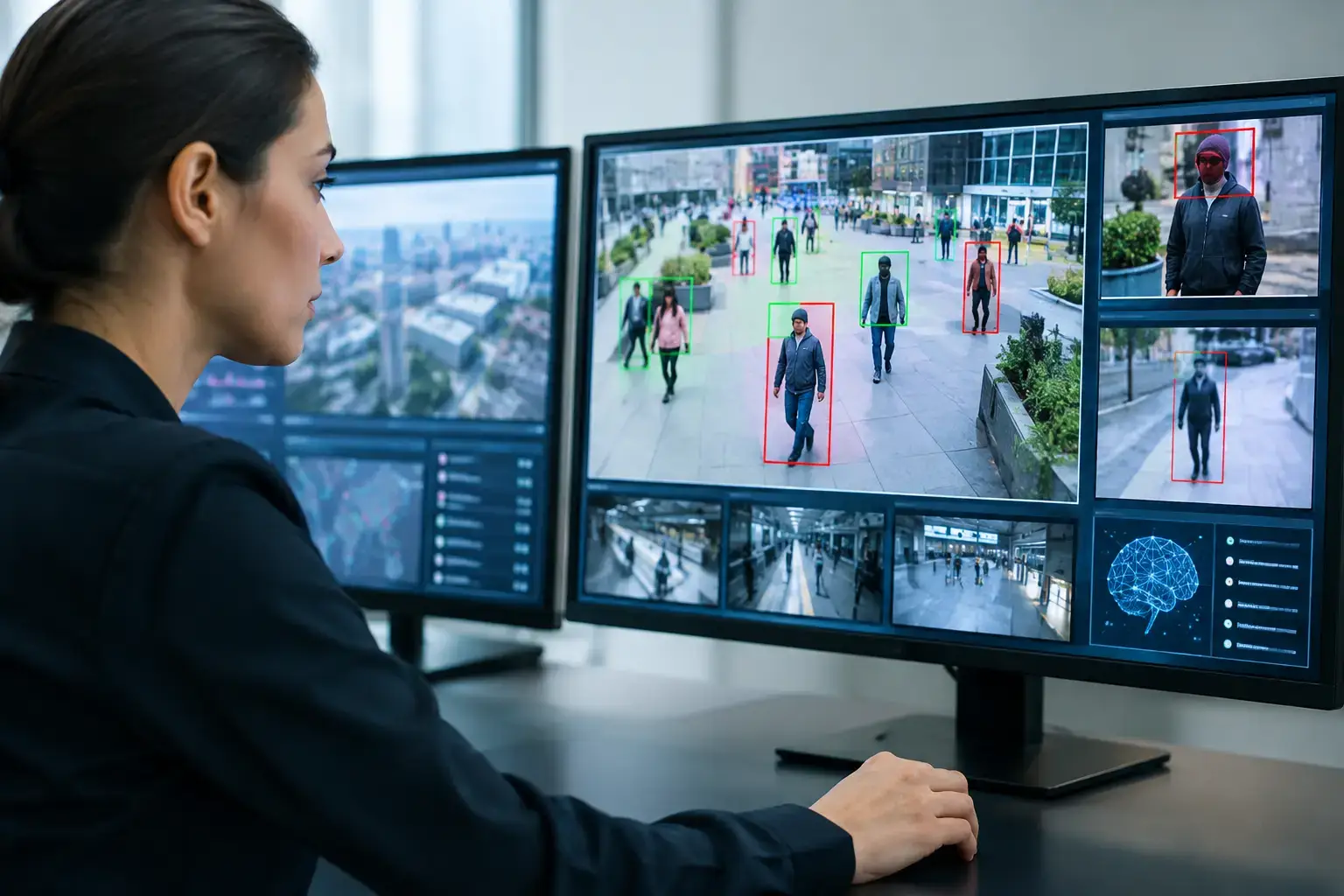
AI threat detection uses machine learning and pattern-recognition systems to analyze information at a scale no individual team can consistently manage alone. Depending on the system and mission, that information may come from surveillance cameras, thermal imaging, drones, access-control systems, perimeter sensors, communications data, or cybersecurity logs.
The goal is not simply to generate more alerts. Security teams already have too many of those. The goal is to distinguish activity that deserves attention from the ordinary movement, noise, and data that surround it.
A well-designed system can flag an unauthorized vehicle near a restricted area, identify unusual movement along a perimeter, detect an object left in an unusual location, or recognize a pattern that differs from normal activity. In a cyber environment, it can surface abnormal login behavior, suspicious network traffic, or attempted access to sensitive systems.
That distinction matters. A flood of low-quality alarms can paralyze a response team. Useful AI helps operators focus on the alerts most likely to require action.
Why Seconds Matter in Protective Operations
Security failures are not always caused by a lack of information. Often, the information existed but was scattered, delayed, or buried under competing demands. A guard may be watching several screens. A command center may receive reports from multiple locations. A patrol may need to make decisions with incomplete visibility.
AI can bring those inputs into a clearer operational picture. It can mark unusual activity, correlate events across sensors, and direct human reviewers to the precise footage or data point that requires judgment. That can shorten the time between detection and response.
For civilian protection, earlier warning can support evacuation decisions, emergency communication, medical readiness, and more effective coordination with first responders. For defenders, it can improve situational awareness without asking already stretched personnel to monitor every feed every second.
The value is practical: less time searching, less uncertainty in the first moments of an incident, and more capacity to protect people.
Technology Supports Judgment, Not Replaces It
There is no responsible version of AI threat detection that removes human judgment from high-stakes decisions. Systems can make errors. Lighting, weather, camera angle, incomplete data, and changing conditions can all affect performance. An alert is not proof. It is a signal that must be assessed by trained people who understand the context.
That is why the strongest security programs treat AI as a decision-support tool. The technology detects, prioritizes, and presents evidence. Human operators verify, determine the appropriate response, and remain accountable for decisions that affect people.
This approach is especially important in environments where civilians, volunteers, families, and responders may all be moving through the same area. Faster detection must never come at the cost of careless action.
Where AI Threat Detection Has the Greatest Impact
The best use cases are specific. A system should be selected because it solves an operational problem, not because artificial intelligence is a popular label.
At a facility or community site, AI-enabled cameras and thermal systems may help identify perimeter breaches, suspicious approach patterns, or activity in restricted areas after hours. Thermal imaging can be particularly valuable where darkness, smoke, or difficult terrain limits conventional visibility.
For mobile operations, drones equipped with intelligent detection capabilities can expand visibility across large areas while reducing the need to place personnel in unnecessary danger. They can help teams assess routes, locate anomalies, and gain situational awareness before committing scarce resources.
In digital environments, AI can assist in identifying phishing attempts, compromised accounts, malware behavior, and other indicators of cyber intrusion. A physical security plan is incomplete if the systems managing communications, access, or sensitive information can be compromised remotely.
The common thread is not the device. It is the mission: identify a meaningful threat early enough to enable a safer response.
The Real Challenge Is Building a Response System
Buying advanced technology is not the same as building protection. A camera without trained operators, defined escalation procedures, maintenance, and reliable communications becomes another piece of hardware waiting to fail at the wrong moment.
Effective deployment begins with a clear question: what threat are we trying to detect, and what will we do when we detect it? Teams need defined alert thresholds, responsible decision-makers, communication channels, and a process for documenting and reviewing incidents.
They also need to test the technology in the conditions where it will actually operate. A system that performs well in a controlled demonstration may produce too many false alerts in rain, dust, heavy traffic, crowded environments, or changing light. Field validation is not optional. It is how teams learn whether an investment creates usable awareness or simply creates more noise.
Training matters just as much. Operators should understand what the system can detect, what it cannot reliably infer, and when to escalate to a supervisor or emergency response partner. Clear protocols make technology faster because people do not have to invent the process in the middle of a crisis.
Accuracy, Privacy, and Accountability Must Stay Connected
Protective technology carries real responsibility. Systems that collect video, location data, or other sensitive information need strong controls over access, storage, retention, and review. The right question is not only, “Can this system collect this data?” It is also, “Who needs it, for what purpose, and for how long?”
Accuracy must also be measured honestly. Every detection system has trade-offs. If a system is tuned to flag nearly everything, it may produce too many false positives and exhaust operators. If it is tuned too narrowly, it may miss meaningful signals. The appropriate balance depends on the threat environment, the available response capacity, and the consequences of being wrong.
Accountability is what turns these trade-offs into responsible practice. Teams should review incidents, examine false alerts and missed detections, adjust settings when conditions change, and ensure qualified humans remain responsible for consequential decisions.
For supporters of protective missions, this is also a funding question. The most impactful investment is rarely the flashiest equipment. It is the vetted solution that fits the mission, can be deployed quickly, and is backed by training, maintenance, and a clear operational plan.
From Detection to Direct Impact
Advanced protective technology works best when it follows a disciplined chain of action: define the urgent need, source a proven solution, deliver it to the people responsible for protection, and measure whether it improves readiness.
That model is central to how Israel Friends approaches urgent needs on the ground. A thermal camera, surveillance system, drone, or protective kit is not meaningful because it is advanced. It is meaningful when it reaches the right team quickly and helps protect a civilian community, a first responder, or a defender facing a real threat.
Donors and mission partners should expect that level of clarity. Ask what capability is needed, how it will be used, who is trained to operate it, and what outcome it is intended to improve. Direct impact begins with direct questions.
The future of protection will include more intelligent systems, more connected sensors, and faster analysis. But the mission remains deeply human: give good people the awareness, tools, and time they need to protect life. When a credible need is identified, the right response is not to wait for perfect conditions. It is to act with discipline, verify what works, and put protection where it is needed most.