
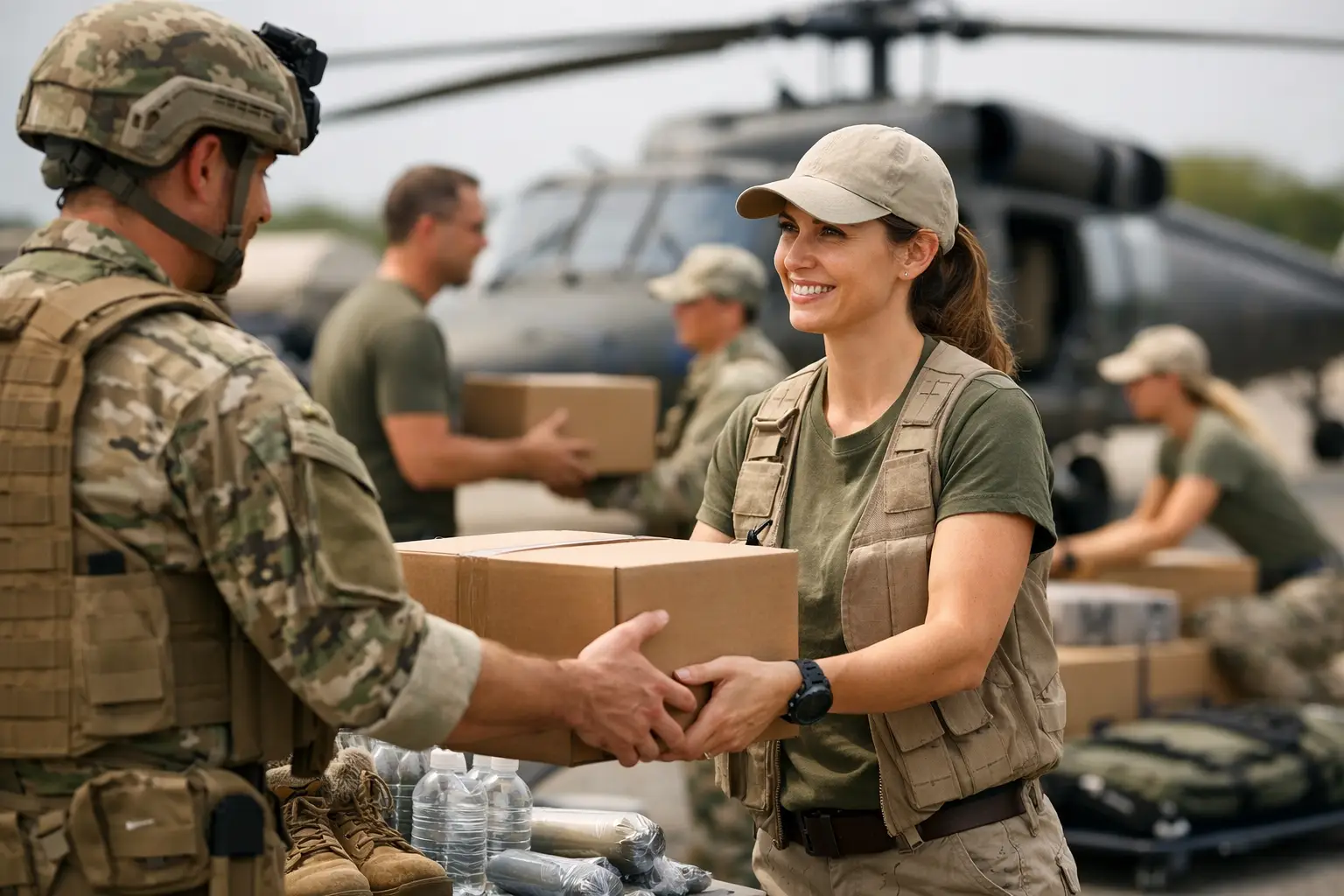
When a unit is missing thermal imaging, a civilian family needs emergency trauma support, or a frontline medic runs short on IFAK supplies, the question is not philosophical. It is immediate. That urgency is the clearest way to understand how military aid nonprofits work. The strongest organizations exist to close dangerous gaps fast, turning donor support into equipment, care, and protection when delay carries a human cost.
This is not charity in the abstract. It is mission execution under pressure. A serious military aid nonprofit identifies a real operational need, verifies it with trusted contacts on the ground, sources the right solution, and gets it where it needs to go without wasting time or donor money. The details matter because the difference between an effective nonprofit and an ineffective one is usually not intent. It is speed, discipline, and accountability.
How military aid nonprofits work on the ground
At their best, these organizations operate like rapid-response problem solvers. They do not simply collect funds and hope those funds eventually reach the right place. They build systems that connect donors to outcomes.
The process usually starts with need identification. A request may come from a military liaison, a local security team, a trauma center, a community leader, or a vetted partner organization. The nonprofit then has to determine whether the request is real, urgent, legal, and appropriate for its mission. This sounds simple until you consider the fog of crisis. Needs change hourly. Information can be incomplete. Multiple groups may be asking for overlapping support.
That is why verification is where credible organizations separate themselves. They confirm quantities, specifications, timelines, and delivery conditions before moving money or inventory. If a team asks for drones, for example, the nonprofit has to know what kind, for what terrain, under what rules, and who will operate them. If the need is psychiatric treatment after a terror attack or wartime trauma, the nonprofit needs licensed care pathways, intake capacity, and local treatment partners that can respond quickly.
Once a need is verified, sourcing begins. Some nonprofits maintain pre-vetted vendor networks so they can move immediately. Others purchase through approved distributors or work with local manufacturers. The point is not just to buy something quickly. It is to buy the right thing at the right quality, at a fair price, with a delivery plan that works in real conditions.
Then comes fulfillment. Depending on the mission, that may mean shipping protective equipment, funding emergency treatment, transferring grant support to a local partner, or coordinating last-mile delivery through trusted personnel. In high-risk environments, logistics are rarely clean. Borders tighten. Roads close. Inventory disappears. A nonprofit that works in this space has to be adaptable without becoming careless.
What military aid nonprofits actually provide
Many people assume these organizations only fund gear. In reality, the strongest military aid nonprofits often work across several layers of protection.
One layer is frontline readiness. That includes items such as IFAK kits, ballistic eyewear, helmets, communications tools, drones, thermal cameras, and surveillance systems. These are concrete, high-impact resources that can improve visibility, mobility, and survivability.
Another layer is civilian protection. In active conflict zones, the line between defending a nation and protecting civilian life is thin. Support may include emergency supplies for displaced families, security upgrades for vulnerable communities, or trauma response resources after attacks.
A third layer is recovery. Conflict does not end when the sirens stop. PTSD treatment, telehealth psychiatric care, resiliency programs, and long-term rehabilitation matter because the cost of war is physical and psychological. An organization that only funds visible equipment but ignores trauma care may meet one urgent need while missing another.
That mix is important for donors to understand. The most effective nonprofits are not always the ones with the broadest mission statements. They are the ones that understand the full chain of need and know where they can create measurable impact.
Where donor money goes
Donors who care about security and life-saving response usually want a direct answer: what happens after I give?
In a disciplined nonprofit, donated funds are allocated to clearly defined programs, emergency campaigns, operating costs, and delivery support. Program spending covers the equipment, care, and services the mission requires. Operations keep the organization functional enough to move with speed. That includes vetting, compliance, communications, coordination, payment processing, and logistics management.
There is sometimes an unrealistic expectation that a legitimate nonprofit should have almost no overhead. That sounds good in a slogan, but it can produce weak execution in real life. If an organization has no operational capacity, it cannot verify needs, negotiate with vendors, track fulfillment, protect donor data, or report outcomes properly. The right question is not whether overhead exists. The right question is whether spending is disciplined and tied to mission performance.
Strong organizations show that connection. They can explain why a certain campaign funded a specific number of kits, treatment sessions, or protective systems. They can also explain why agility requires some infrastructure. In crisis work, efficiency is not about starving the engine. It is about keeping the engine lean enough to move fast and accountable enough to be trusted.
Why speed matters – and where caution still matters
The core promise in this sector is urgency. Lives may depend on getting a solution into the field now, not next quarter. That is one reason entrepreneurial nonprofits often outperform slower institutions in acute situations. They define, source, and deliver with less bureaucracy.
But speed without controls creates risk. A rushed organization can buy the wrong equipment, duplicate another group’s work, or respond to emotional pressure rather than verified need. The best military aid nonprofits build fast systems, not reckless ones. They maintain vendor lists before emergencies happen. They establish local relationships before a crisis peaks. They know who can authorize requests and who can confirm receipt.
That balance matters for donors. A nonprofit should move quickly, but it should never ask you to treat urgency as an excuse for opacity. If the mission is serious, transparency should increase as urgency increases.
How to tell if a military aid nonprofit is credible
If you want to understand how military aid nonprofits work, watch how they talk about results. Weak organizations speak in vague emotion. Strong ones show operational clarity.
A credible nonprofit can usually tell you what need it addressed, who the beneficiaries were, how the request was verified, what was sourced, and what changed because of the intervention. It does not need to disclose sensitive details that could compromise security, but it should still be able to communicate real impact.
Look for signs of disciplined execution. Are campaigns tied to specific goals? Are partners named when appropriate? Are outcomes quantified? Does the organization understand the difference between a compelling story and a documented result?
Also pay attention to posture. Serious groups do not present themselves as saviors. They present themselves as force multipliers for people already carrying the burden on the ground. That mindset leads to better collaboration with military units, health agencies, local organizations, and community leaders.
For supporters of Israel, this is where mission alignment becomes especially important. The most effective organizations act with moral clarity and operational restraint. They do not posture. They protect. They do not confuse awareness with action. They move resources where they can save lives and strengthen resilience.
The trade-offs every effective nonprofit has to manage
This work is not simple, and donors should be wary of anyone who pretends it is. There are constant trade-offs.
Some needs are visible and easy to fundraise around, like protective gear. Others are just as urgent but less visible, like psychiatric care or long-term trauma recovery. Some donors prefer tangible equipment because they can picture it. Others understand that a fast-access PTSD intervention can be just as life-saving in a different way.
There is also a trade-off between broad reach and deep specialization. A nonprofit that tries to do everything may lose focus. A nonprofit that stays too narrow may miss urgent adjacent needs. It depends on leadership, partnerships, and execution capacity.
The strongest model is often focused but flexible. That means knowing your lane, while still responding to the realities of the field. Organizations such as Israel Friends have built support by operating exactly in that tension – moving fast, sourcing vetted solutions, and staying close enough to the ground to know when equipment, trauma care, or protective technology will make the biggest difference.
For donors, that is the real takeaway. Give where there is urgency, but also where there is discipline. Support the groups that can prove they know the terrain, the partners, the logistics, and the stakes.
A serious military aid nonprofit does more than raise money. It converts conviction into protection, speed into survival, and trust into measurable action. If you want your support to matter when the pressure is highest, look for the organization that is built to act before the window closes.