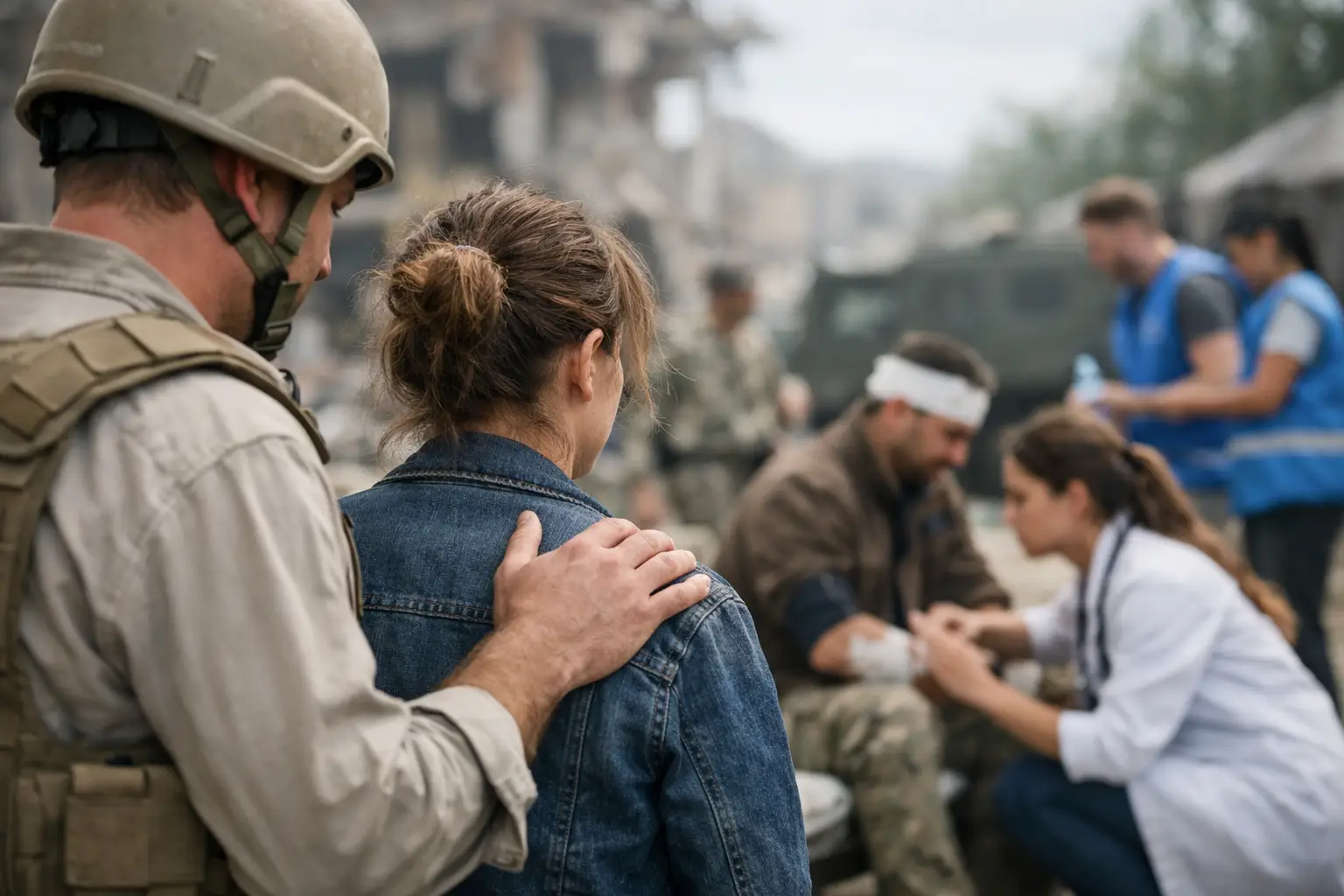
A family can leave a shelter after an attack and still be living on the front line. The immediate danger may have passed, but the recovery clock has just started: a child cannot sleep, a parent cannot work, a home is damaged, a community’s routines are gone. Learning how to support frontline civilian recovery means responding to that full reality, not only to the first emergency.
Civilian recovery is not passive relief. It is the work of helping people regain safety, stability, agency, and the ability to care for one another while threats may continue. That requires compassion with operational discipline. The strongest support reaches people quickly, solves a defined need, and remains accountable for what happens next.
Recovery Starts Where the Emergency Ends
Frontline communities often live with a different timeline than distant observers. During an attack or evacuation, urgent needs are obvious: medical supplies, safe transport, food, communications, protective equipment, and shelter. In the days and weeks afterward, the needs become less visible but no less serious.
A family may need replacement essentials after leaving home with almost nothing. A local clinic may need capacity to serve people experiencing acute anxiety, grief, or trauma. A school may need trained staff and protected spaces before children can return. Small businesses may need support to reopen so households can regain income and a community can retain its basic services.
Recovery is therefore not a single category of aid. It is a sequence. Physical security, practical stability, and mental health support must move together. Neglect one, and the others are weakened. A person cannot fully engage in trauma treatment if they do not know where their family will sleep. A community cannot rebuild confidence if its residents still lack the tools to identify and respond to danger.
How to Support Frontline Civilian Recovery With Purpose
The most useful support is specific. Before contributing time, funds, supplies, or advocacy, ask a direct question: What problem is this action solving for a civilian family or community right now?
That question protects against well-intentioned but low-impact giving. Large, unrestricted drives can create a sense of participation, yet they may not address the urgent bottleneck on the ground. A local resiliency center may need fast-access therapy sessions, while another community may need communications equipment, emergency medical kits, or transportation for displaced residents. The need determines the intervention.
Fund rapid, practical stabilization
Practical assistance gives families room to breathe. This can include emergency food, hygiene supplies, temporary housing support, generators, communications tools, transportation, and replacement items needed to restore a household’s basic function.
Speed matters. When a family is displaced, a delayed response can turn a short crisis into a prolonged disruption. But speed without verification is not enough. Effective organizations identify the need with trusted local partners, source reliable solutions, and deliver to the people responsible for distribution. The goal is not merely to move supplies. It is to restore capability.
Donors should look for clear descriptions of what funding supports and how it will be used. Specificity is a sign of operational readiness. It also helps supporters understand the human outcome behind the expense: a stocked clinic, a protected neighborhood team, a family able to return home, or a child able to begin sleeping through the night again.
Treat trauma care as urgent care
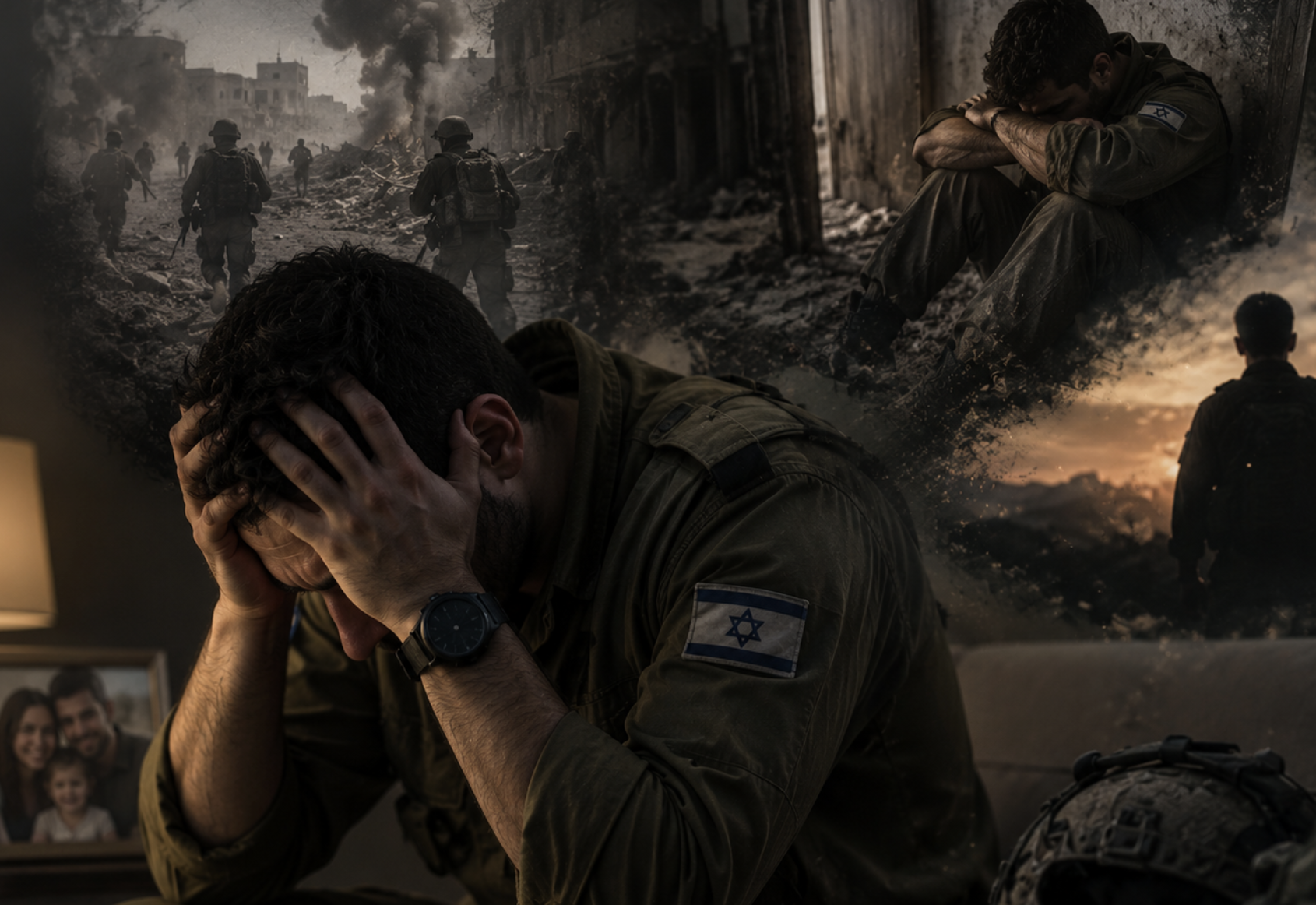
Psychological trauma does not wait until a crisis is over. Civilians exposed to attacks, displacement, loss, and prolonged uncertainty may need help immediately, not months later when symptoms have deepened.
Fast-access care can include crisis counseling, trauma-informed group support, telehealth psychiatry, referrals for medication management, and long-term treatment when needed. The right approach depends on the person. Some need immediate stabilization and a trusted professional to help them get through the first days. Others need ongoing therapy to address post-traumatic stress, depression, panic, or grief.
There is a trade-off here. Short-term counseling can reach more people quickly, while intensive individualized treatment may be essential for those with more severe symptoms. Strong recovery programs do not force a false choice. They create a pathway from immediate support to sustained care, with clinical oversight and the ability to escalate treatment when necessary.
Trauma care also has to be accessible. Parents, elderly residents, first responders, and displaced families may be unable to travel or take time away from urgent responsibilities. Telehealth and community-based services can reduce that barrier. Privacy matters as well. People are more likely to seek help when support is confidential, culturally aware, and easy to access.
Strengthen the people who hold communities together
Recovery does not happen only in a clinic. Teachers, municipal staff, volunteer medics, social workers, neighborhood coordinators, and local business owners often become the connective tissue of a community under pressure.
Supporting these local leaders multiplies impact. Training school staff to recognize trauma responses can help children before symptoms become entrenched. Providing community teams with emergency supplies and communications tools can improve readiness for the next incident. Supporting local coordinators can ensure isolated residents are not forgotten.
This is where protective technology and recovery meet. Tools such as thermal cameras, surveillance systems, drones, medical kits, and reliable communications can reduce uncertainty and improve response time. They are not substitutes for human care. They help make human care possible by giving communities better awareness, faster coordination, and more confidence in their ability to protect residents.
Choose Accountability Over Good Intentions
In a high-pressure environment, every donated dollar should have a job. Supporters deserve to know whether an organization can define the need, source the solution, and deliver it without layers of delay.
That does not mean every outcome can be reduced to a single number. Healing is personal, and recovery takes time. But responsible organizations can still report concrete inputs and outputs: equipment delivered, treatment sessions funded, families assisted, communities reached, and partnerships activated. They can explain why a need was prioritized and how local stakeholders shaped the response.
Ask practical questions before you give:
- Is the organization working through verified local partners and professionals?
- Does it identify specific needs rather than relying on vague emergency language?
- Can it move quickly when conditions change?
- Does it communicate what was delivered and why it mattered?
- Does it support both immediate safety and longer-term recovery?
These questions are not a barrier to generosity. They are how generosity becomes durable impact. Accountability protects donors, but more importantly, it protects the civilians whose recovery depends on the quality of the response.
Turn Concern Into Useful Action
Financial support is often the fastest way to meet an urgent, changing need because trusted teams can purchase, transport, and distribute the right resources locally. It is particularly effective when a response organization already has vetted vendors, medical partners, and ground-level relationships in place.
Still, money is not the only form of participation. Community members can organize focused campaigns around a defined recovery need, bring in mission-aligned businesses, amplify verified information, volunteer professional skills, or become ambassadors who help turn concern into sustained support. A campaign tied to a clear outcome is easier for others to understand and more likely to earn trust.
Avoid sending unsolicited physical goods unless a verified partner has requested them. Storage, customs, sorting, and transportation can consume valuable time and resources. The most compassionate act is not always the most visible one. Sometimes it is funding the local team that already knows exactly what is needed.
For supporters of Israel, this work carries moral urgency. Civilian resilience is part of national resilience. When families receive timely care, when communities regain practical capacity, and when trauma is treated rather than ignored, the front line becomes harder to break.
Israel Friends operates from that conviction: define the need, source the solution, deliver the impact. The model matters because frontline civilians cannot afford bureaucratic delay or symbolic support. They need partners prepared to act with urgency, precision, and respect for the people living through the crisis.
The next time a frontline community faces loss, do not let the moment end with outrage alone. Choose one concrete need, support the people equipped to meet it, and stay engaged long enough for recovery to take hold. That is how aid becomes protection, and protection becomes a path back to daily life.