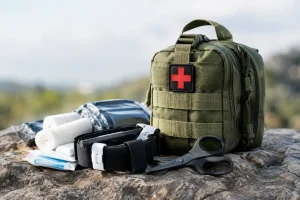

A trauma center cannot treat a civilian with a promise. A defender under threat cannot rely on a future procurement cycle. They need an IFAK kit, ballistic eyewear, a thermal camera, or immediate access to trauma care when the need is real. That is what low overhead nonprofit impact should mean: more than a favorable number on a financial statement, it should mean that donated resources move quickly and decisively toward protecting lives.
For supporters of Israel, efficiency is not an abstract charity benchmark. It is a measure of readiness. Every dollar delayed by unnecessary layers, poorly defined programs, or slow purchasing processes is a dollar that may miss the moment it was needed most.
Low Overhead Nonprofit Impact Is About Execution
Overhead matters. Donors deserve to know that their gifts are not being consumed by avoidable administrative costs, vague programs, or fundraising machinery that produces more marketing than mission. But overhead alone does not prove effectiveness.
A nonprofit can report low administrative expenses and still fail to deliver meaningful outcomes. It may lack trusted partners, move too slowly, purchase the wrong equipment, or have no system for confirming whether resources reached the people who needed them. Low overhead without operational discipline is simply inexpensive inaction.
Real low overhead nonprofit impact is created when an organization can define the urgent need, source a vetted solution, and deliver it into capable hands with minimal friction. That requires judgment, trusted relationships, clear accountability, and the willingness to act while others are still scheduling meetings.
In a high-stakes environment, the strongest model is not the one that spends the least at any cost. It is the one that keeps unnecessary costs low while maintaining the people, systems, verification, and field relationships required to act fast and act correctly.
The Difference Between Lean and Underprepared
There is a dangerous version of the low-overhead conversation: the belief that every dollar spent on operations is waste. It is not.
Field coordination, vendor vetting, secure logistics, compliance, financial controls, needs assessment, and impact reporting all require investment. So do the partnerships that allow an organization to understand what frontline units, local communities, medical teams, and resiliency centers need before a crisis turns into a larger catastrophe.
The goal is not to strip an organization down until it cannot function. The goal is to eliminate bureaucracy that does not protect or serve the mission.
Consider the difference between two approaches. One organization raises funds for a broad emergency initiative, sends them through several institutional layers, and waits for a formal allocation process. Another identifies a specific shortage, verifies the request with trusted partners, purchases mission-critical equipment from a vetted supplier, and tracks delivery to the intended recipient. Both may be well-intentioned. Only one is built for urgent action.
For Israel Friends, that operating mindset is simple: define, source, deliver. It is a startup-style discipline applied to a humanitarian mission. The work is measured by whether essential aid reaches defenders and civilians, not by how many steps can be added to a process.
What Direct Impact Looks Like on the Ground
Direct impact is concrete. It has a destination, a purpose, and a reason it cannot wait.
A donor should be able to understand what their support makes possible: protective equipment for defenders, surveillance and thermal capabilities that strengthen situational awareness, drones that support real-time operations, and trauma care that helps civilians and responders confront the lasting cost of violence.
This is also why one-time delivery is not always enough. Protective equipment can address an immediate threat. PTSD treatment and telehealth psychiatric support address the injury that may remain after the immediate danger has passed. A serious response recognizes both needs. It protects people in the moment and helps them recover afterward.
That balance matters because impact is not limited to an item purchased or a shipment delivered. The deeper question is whether the intervention improves readiness, safety, resilience, or access to care. A thermal camera stored in the wrong place has limited value. The same camera, delivered to a verified need and integrated into active protection efforts, can help save lives.
Questions Donors Should Ask Before Giving
Values-driven donors do not need a glossy promise. They need clear answers. Before supporting a rapid-response nonprofit, ask how it identifies urgent needs, who verifies those needs, how it selects vendors, and how it confirms delivery.
Ask whether the organization can explain the difference between its immediate-response work and its long-term programs. Ask what safeguards prevent duplication, waste, or mission drift. Ask how it handles the trade-off between moving quickly and conducting proper due diligence.
The answer should not be a vague claim that “every dollar helps.” Every dollar should have a job.
Strong organizations can describe their operating model in plain language. They can explain why a particular need was prioritized, how funds were allocated, and what happened after delivery. In crisis work, some details may need to remain confidential for security reasons. That does not remove the obligation to be accountable. It makes disciplined communication even more necessary.
Speed Is a Form of Stewardship
When a crisis is unfolding, speed is not a luxury. It is stewardship.
A slow response can increase costs, deepen trauma, and leave communities exposed. A fast response, if it is informed and accountable, can reduce harm before it expands. This is especially true for equipment and care that are needed during active threat conditions or immediately afterward.
Speed does not mean recklessness. It means building the relationships and operational capacity before the emergency arrives. It means knowing which vendors can deliver, which partners can validate a need, and which channels can move aid without bureaucratic delay.
That preparation often goes unseen by the public. It may never become a dramatic photo or a social media post. But it is what allows a nonprofit to act when a request comes in at night, when a community has been displaced, or when a responder needs life-saving support without another week of paperwork.
Accountability Must Follow the Delivery
Delivery is a milestone, not the finish line.
Low overhead nonprofit impact depends on a feedback loop. Did the equipment arrive? Was it the right equipment? Did the recipient have the ability to deploy it? Has the need changed? Can the organization document the outcome without compromising safety or operational security?
This is where many charitable efforts lose momentum. Funds are raised, a campaign closes, and supporters are left with a broad statement of gratitude rather than evidence of what their support accomplished. That approach may preserve a comforting story, but it does not build lasting donor confidence.
Accountability means staying close enough to the mission to learn. Sometimes the lesson will be that a program should expand. Sometimes it will be that a particular intervention was less useful than expected and funds should be redirected. Responsible organizations make those adjustments quickly, because the mission matters more than defending an outdated plan.
A Better Standard for Giving
Donors should expect an organization to keep costs disciplined. They should also expect it to have enough capability to operate safely, verify needs, and deliver at speed. These are not competing priorities. When managed well, they reinforce each other.
The best measure is not simply how little a nonprofit spends on itself. It is how effectively it turns donor trust into protection, preparedness, and recovery for real people facing real threats.
Before your next gift, look beyond the overhead percentage. Ask what happens between the donation and the outcome. Support organizations that can show urgency without chaos, lean operations without cutting essential capacity, and compassion backed by action. When lives are on the line, your generosity should not wait in a queue.