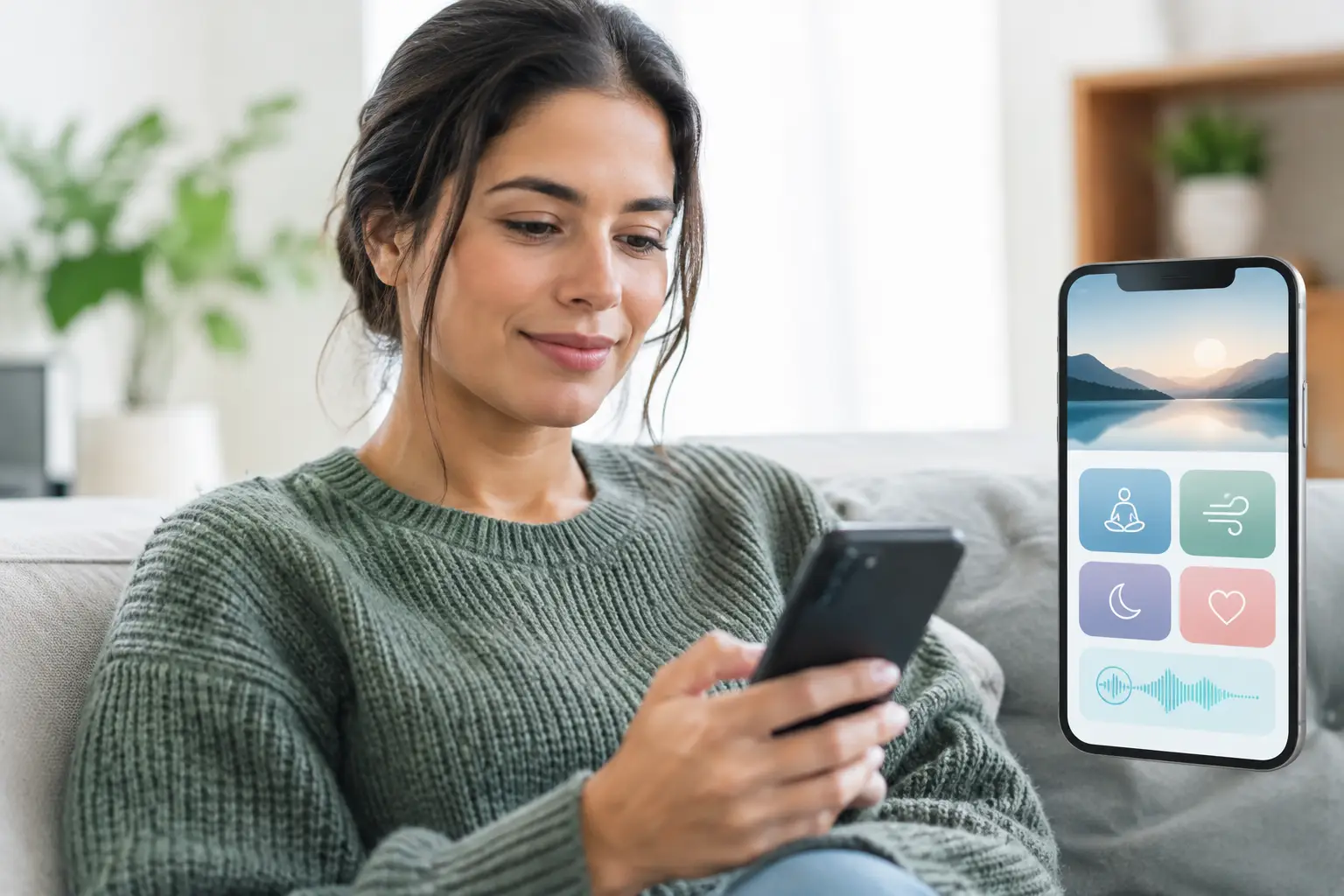
A phone can place a grounding exercise, a sleep routine, or a direct connection to care within reach when a trauma response hits. That access matters. But PTSD app reviews should never treat a trauma-support tool like a simple product rating. For defenders, civilians, families, and caregivers carrying the weight of violence and loss, the right question is not whether an app has a polished interface. It is whether it supports real recovery without creating false confidence, exposing sensitive data, or delaying professional help.
Trauma care needs speed and judgment. Digital tools can extend support between appointments and lower the barrier to taking a first step. They cannot replace a qualified clinician, emergency services, or the human relationships that help survivors regain safety and stability.
Why PTSD app reviews require a higher standard
Most app-store ratings measure convenience: Does the app load quickly? Is it easy to use? Are there annoying ads? Those questions count, but they are not enough for PTSD-related tools.
A trauma app may ask users to record triggers, sleep patterns, thoughts, locations, medication reminders, or deeply personal experiences. It may prompt breathing exercises during panic, guide a user through a difficult memory, or encourage contact with a therapist. The stakes are higher than they are for a fitness tracker or a language-learning app.
Strong reviews should therefore look at clinical integrity, privacy, accessibility, and what happens when the app is not enough. A five-star rating is not evidence that a tool is safe or effective for every survivor. A low rating may reflect technical frustration rather than the quality of the underlying approach. Read beyond the score.
For communities supporting Israel’s defenders and civilians, this distinction is especially urgent. Trauma does not follow a schedule. It can surface after a siren, a news alert, a loud sound, a difficult anniversary, or a quiet moment at home. Support tools must be practical under pressure, respectful of culture and language, and connected to care that can respond when symptoms intensify.
What to look for in PTSD app reviews
The most useful reviews answer specific questions. They describe what the app actually does, who it may help, and where its limits are. Look for evidence, not broad promises of healing.
1. Clear purpose and realistic claims
Some apps focus on psychoeducation: explaining trauma responses, common symptoms, and coping skills. Others offer symptom tracking, guided relaxation, journaling, peer support, or telehealth access. These functions are different, and the review should name them plainly.
Be wary of language that promises to “cure” PTSD, erase memories, or deliver transformation in a few minutes a day. Recovery can be meaningful and measurable, but it is rarely linear. A credible tool frames itself as support, not a substitute for diagnosis or treatment.
2. Clinical grounding
Look for information about who developed the content. Is it informed by licensed mental health professionals, trauma researchers, veterans’ health systems, or established therapeutic methods? Does the app explain its approach in understandable terms?
Evidence-based coping methods can include grounding, paced breathing, sleep support, cognitive skills, and planning for difficult moments. Yet even a clinically informed app may not fit everyone. For some people, tracking symptoms can be empowering. For others, repeated monitoring can increase distress. Good reviews acknowledge that trade-off rather than pretending one tool works for all users.
3. A real privacy policy, not vague reassurance
Privacy is a safety issue. Before sharing personal information, users and families should understand what data the app collects, where it is stored, whether it is encrypted, and whether it is shared with advertisers, analytics providers, employers, insurers, or other third parties.
Reviews should flag apps that require unnecessary permissions, such as constant location access or contact lists, without a clear reason. They should also distinguish between an app that merely says it values privacy and one that explains data practices in plain language.
This is particularly relevant for service members, first responders, survivors of attacks, and anyone concerned about digital security. A useful trauma tool should reduce burden, not create another point of vulnerability.
4. Crisis guidance that is visible and responsible
An app cannot manage an emergency by itself. If a user is in immediate danger, considering self-harm, or unable to stay safe, they need urgent human support through local emergency services, a crisis line, a trusted clinician, or a nearby person who can act.
Quality PTSD app reviews check whether crisis guidance is easy to find and appropriate to the user’s location. They should also note whether an app makes clear that it is not monitored around the clock. An unmonitored chat feature or automated response may feel supportive, but it is not the same as immediate clinical intervention.
5. Ease of use when concentration is low
Trauma symptoms can affect focus, memory, sleep, and decision-making. A complicated registration process, crowded screen, or confusing menu can make a theoretically helpful app unusable at the moment it is needed most.
Look for reviews that address practical details: Can users access key exercises quickly? Does the app work with limited connectivity? Are captions, readable text, and adjustable settings available? Is the content offered in the language the user understands best? These are operational questions, and they often determine whether support reaches someone in time.
The difference between self-guided support and telehealth care
PTSD apps generally fall into two broad groups. Self-guided tools provide exercises, education, reminders, and tracking. Telehealth platforms may connect users to licensed professionals for assessment, therapy, medication management, or follow-up care.
Self-guided apps can be valuable for practicing skills between sessions or taking a manageable first step toward help. They may also help families understand why a loved one is withdrawing, struggling to sleep, or reacting strongly to reminders of trauma. But a self-guided app is not designed to carry the full load of severe symptoms, complex trauma, substance-use concerns, or an escalating crisis.
Telehealth can reduce distance and wait times, especially for people outside major population centers or those unable to attend an office visit easily. Still, availability, licensing, cost, insurance coverage, language, and continuity of care can vary. Reviews should state those limitations clearly instead of treating virtual care as automatically accessible.
The strongest model is often coordinated care: a vetted clinician or resiliency center provides treatment, while a carefully chosen app helps users practice skills, remember plans, and stay connected between appointments.
Questions families and supporters should ask
When someone you love is living with trauma, the instinct is to find the fastest solution. That instinct comes from care, but it can lead to downloading the first app with promising language. Slow down long enough to ask whether the tool was built for the person’s actual needs.
Ask what symptoms they want help managing, whether they already have a clinician, and whether they are comfortable using a phone-based tool. Ask whether the app’s privacy terms feel acceptable and whether it provides a clear path to human support. Most of all, ask permission before recommending or downloading anything on their behalf. Trauma can involve a loss of control. Choice matters.
Supporters can also help in practical ways: offer to sit with someone while they explore a tool, help locate a trauma-informed provider, or check in after a difficult appointment. No app can replace that kind of steady presence.
Turning scrutiny into better trauma support
The best PTSD app reviews do more than rank features. They protect people from exaggerated claims and direct attention toward tools that are clinically responsible, private, usable, and connected to real care.
At Israel Friends, fast-access trauma care is part of protecting lives after the immediate emergency has passed. Equipment can help defend a community in a critical moment. Sustained mental health support helps people reclaim the days that follow. When evaluating a digital trauma tool, choose caution over hype, evidence over marketing, and a clear route to qualified human care. That is how technology can serve recovery rather than merely advertise it.