A preventable bleed can become fatal before an ambulance, medic, or hospital is within reach. That is the reality an Individual First Aid Kit is built for. So, what is an IFAK kit? It is a compact, personal trauma kit designed to help control life-threatening injuries at the point of injury, especially severe bleeding, while trained medical care is on the way.
An IFAK is not a general-purpose medicine cabinet. It is not meant for headaches, minor scrapes, or convenience. It is mission-critical equipment for the minutes when decisive action can protect a life.
What Is an IFAK Kit Designed to Do?
IFAK stands for Individual First Aid Kit. The word individual matters. Unlike a larger vehicle kit or a group medical bag, an IFAK is configured so one person can carry it on their body, in a vehicle, or in immediately accessible gear.
Its primary purpose is simple: give a responder the tools to address the most immediate, survivable threats from traumatic injury. In many emergency settings, uncontrolled hemorrhage is the urgent concern. The kit may also support basic wound management and help protect injuries until evacuation, a medic, or emergency department takes over.
For defenders, first responders, security teams, and civilians operating under elevated risk, distance and delay change outcomes. A well-stocked IFAK puts essential tools in the hands of the person already there. It does not replace professional care. It buys time for it.
Why an IFAK Is Different From a Standard First Aid Kit
A household first aid kit is usually built around minor injuries: adhesive bandages, antiseptic wipes, tweezers, pain relievers, and ointment. Those supplies have a place, but they are not designed for penetrating trauma, blast injuries, deep lacerations, or major blood loss.
An IFAK is organized around trauma priorities. It should be compact enough to carry, protected from dirt and weather, and arranged so critical items can be reached quickly under pressure. In an emergency, searching through loose supplies wastes time. Clear organization is part of the equipment.
There is also an important trade-off. A larger kit can hold more supplies, but a kit left in a backpack, trunk, or storage room cannot help during the first critical moments. The best IFAK is one that is accessible, complete, and supported by training.
What Is Typically Inside an IFAK Kit?
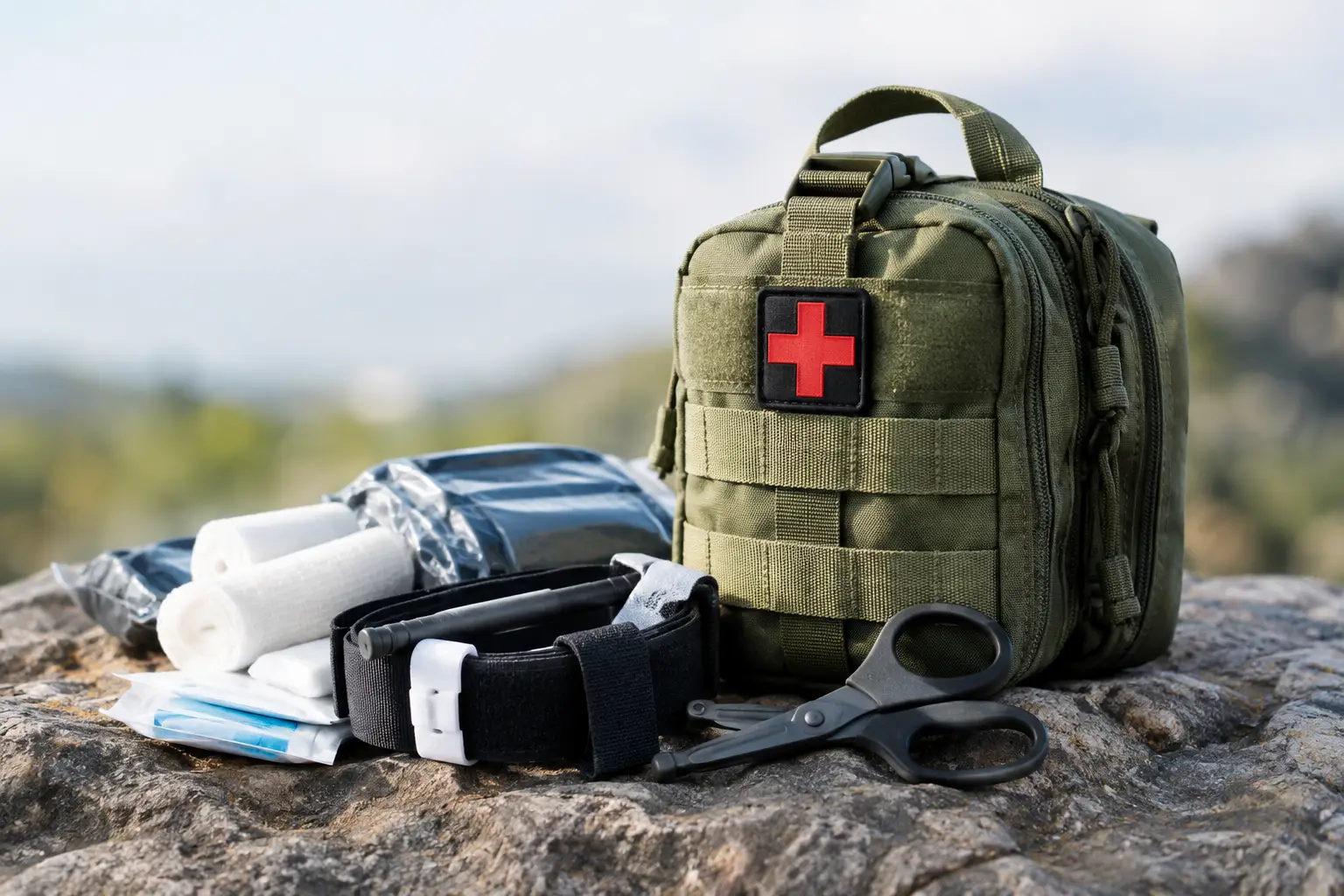
Contents vary by mission, environment, training level, and local protocols. A kit issued to a soldier may look different from one carried by a civilian volunteer, security professional, or driver. Still, a trauma-focused IFAK commonly includes items such as:
- A commercial tourniquet for severe extremity bleeding
- Hemostatic gauze or compressed gauze for wound packing and bleeding control
- Pressure dressings to secure wounds and maintain direct pressure
- Chest seals for penetrating injuries to the chest
- Trauma shears, gloves, and a marker for safer, more organized response
- Emergency blanket materials that can help limit heat loss
Some kits include additional supplies, such as airway tools or eye protection, but more equipment is not automatically better. Specialized tools require specialized knowledge. A poorly selected or improperly used item can create confusion when speed and clarity matter most.
That is why vetted sourcing matters. Counterfeit tourniquets, expired supplies, and low-quality components can fail when they are needed most. A low price is not a meaningful savings if the equipment cannot perform in a crisis.
The Kit Is Only One Part of Readiness
An IFAK can be life-saving, but it is not magic. Equipment works best when the person carrying it has trained with it, understands where each item is located, and knows when to call for higher-level care.
Trauma training helps people recognize immediate threats, communicate clearly, and act without freezing. It also teaches boundaries. Not every injury should be managed the same way, and no field intervention eliminates the need for rapid evacuation and professional assessment.
Practice matters because stress changes performance. Fine motor skills degrade. People forget steps. A familiar kit with straightforward components is often more useful than an overloaded pouch full of gear the carrier has never handled.
For teams, readiness also means standardization. When personnel carry similarly organized kits, another trained responder can find what they need without guessing. In a high-pressure environment, that shared system can save precious seconds.
Who Should Carry an IFAK?
The answer depends on exposure to risk. Military personnel, emergency responders, security professionals, and search-and-rescue teams are obvious candidates. But civilians may also benefit from a trauma kit in places where emergency access could be delayed, including vehicles, work sites, remote travel, houses of worship, community events, and homes.
For Israel’s defenders and civilians, this need is not theoretical. Attacks, mass-casualty incidents, and active security threats can create conditions where the first person able to help is a teammate, neighbor, or bystander. Fast access to the right equipment can turn helplessness into meaningful action.
That is why mission-ready aid focuses on tangible capability, not vague promises. Israel Friends helps identify urgent frontline needs, source vetted protective and trauma-care equipment, and move it where it can protect lives without unnecessary delay. An IFAK is a small package with a direct purpose: give someone a fighting chance before the next level of care arrives.
How to Choose an IFAK Responsibly
Start with the environment where the kit will be used. A kit for a vehicle can be somewhat larger than one carried on a belt or plate carrier. A kit used in hot, dusty conditions needs durable packaging. A family kit should be simple enough that trained adults can quickly identify its contents.
Then assess quality and accessibility. Choose recognized, purpose-built medical components rather than improvised substitutes. Confirm expiration dates, inspect packaging for damage, and replace used items immediately. Store the kit where it can be reached in seconds, not buried beneath other gear.
Finally, match the kit to training. If a tool is unfamiliar, seek credible hands-on instruction before relying on it. Many communities offer bleeding-control and trauma-response courses. The goal is not to turn every civilian into a medic. It is to ensure that when seconds matter, more people are prepared to act calmly, use appropriate equipment, and get help moving.
Maintain the Kit Before You Need It
An IFAK should be checked like any other critical gear. Review it after training, after travel, after exposure to moisture or extreme heat, and on a regular schedule. Look for damaged packaging, missing gloves, expired components, and supplies that were used but never replaced.
Keep the kit personal and intentional. Borrowing key supplies from it for routine cuts can leave it incomplete during a real emergency. If you need everyday first aid items, maintain a separate general first aid kit.
Preparedness is not about expecting the worst every day. It is about refusing to be powerless when the worst happens nearby. A properly equipped IFAK, paired with real training and a commitment to rapid medical escalation, is one practical way to protect the people who depend on you.