A thermal camera that arrives after a threat has moved is not a solution. Ballistic eyewear that fogs during a critical response is not protection. A drone with no trained operator can become an expensive box on a shelf. That is why a serious protective technology review cannot be a catalog of impressive gear. It must answer a harder question: will this tool help protect a person when time, visibility, communication, and certainty are all in short supply?
For donors and mission partners, this standard matters. Every dollar directed toward frontline readiness should translate into equipment that can be deployed, used, maintained, and trusted under pressure. The goal is not to fund technology for its own sake. The goal is to reduce vulnerability, give defenders better awareness, and help civilians reach safety faster.
What a Protective Technology Review Must Measure
The first measure is operational fit. Equipment should solve a defined problem for a defined user in a defined environment. A surveillance system may be valuable at a vulnerable community perimeter, but it is not a substitute for personal medical equipment or protective eyewear. A thermal camera can extend visibility at night, but it cannot compensate for unclear procedures or an untrained team. Each capability has a lane.
This sounds obvious, yet it is where many well-intended purchases fail. Technology is often evaluated by features: range, resolution, battery life, software functions, or a manufacturer’s reputation. Those specifications matter, but they are not the full story. The right question is whether the equipment improves decisions and outcomes in the field.
A practical assessment starts with the threat. Is the immediate risk low visibility, delayed casualty care, exposure to fragmentation, a blind spot around a community, or an inability to communicate fast enough? Once the risk is clear, the protective tool can be judged against it. This define, source, deliver discipline prevents money from being spent on equipment that looks useful but does not meet the urgent need.
The second measure is reliability under real conditions. Gear may perform well in a controlled demonstration and fail after dust, heat, rain, repeated transport, low-light use, or long hours without charging. Frontline teams need equipment that holds up when conditions are least forgiving.
Reliability also includes supply continuity. If a device requires proprietary batteries, specialized parts, or software support that cannot be accessed quickly, its real-world value may be lower than its initial promise. A less complex solution with dependable replacement parts can be the better decision, especially when deployment speed matters.
The Equipment Categories That Demand Different Standards
Protective technology is not one category. It includes personal protection, casualty-response tools, observation systems, and communication-enabling equipment. Treating all of it as interchangeable creates blind spots in both planning and funding.
Personal protection must be wearable and usable
Ballistic eyewear, helmets, protective vests, and related equipment are only effective if personnel can wear them correctly for the duration of the mission. Fit, weight, field of view, fog resistance, comfort, and compatibility with other gear all matter. Protection that limits movement, obscures vision, or creates fatigue may be removed at the exact moment it is needed.
This is where a review must acknowledge trade-offs. Higher protection can mean more weight. Lighter equipment can mean lower coverage or a shorter service life. There is no universal best option. The best option depends on the threat level, the mission length, the user’s role, and the conditions on the ground.
Medical readiness is measured in seconds
Individual first aid kits, trauma supplies, and emergency-response equipment should be assessed through the lens of access and training. An IFAK is not just a collection of components. It is a life-saving capability when the right supplies are organized, reachable, and paired with people who know how to use them.
A review should consider whether the kit matches likely injury patterns, whether supplies are within date, and whether its contents can be reached with either hand under stress. It should also ask who has been trained, how frequently that training is refreshed, and whether resupply is planned. A donated kit without a replenishment plan can become a false sense of readiness.
Sensors and surveillance must create actionable awareness
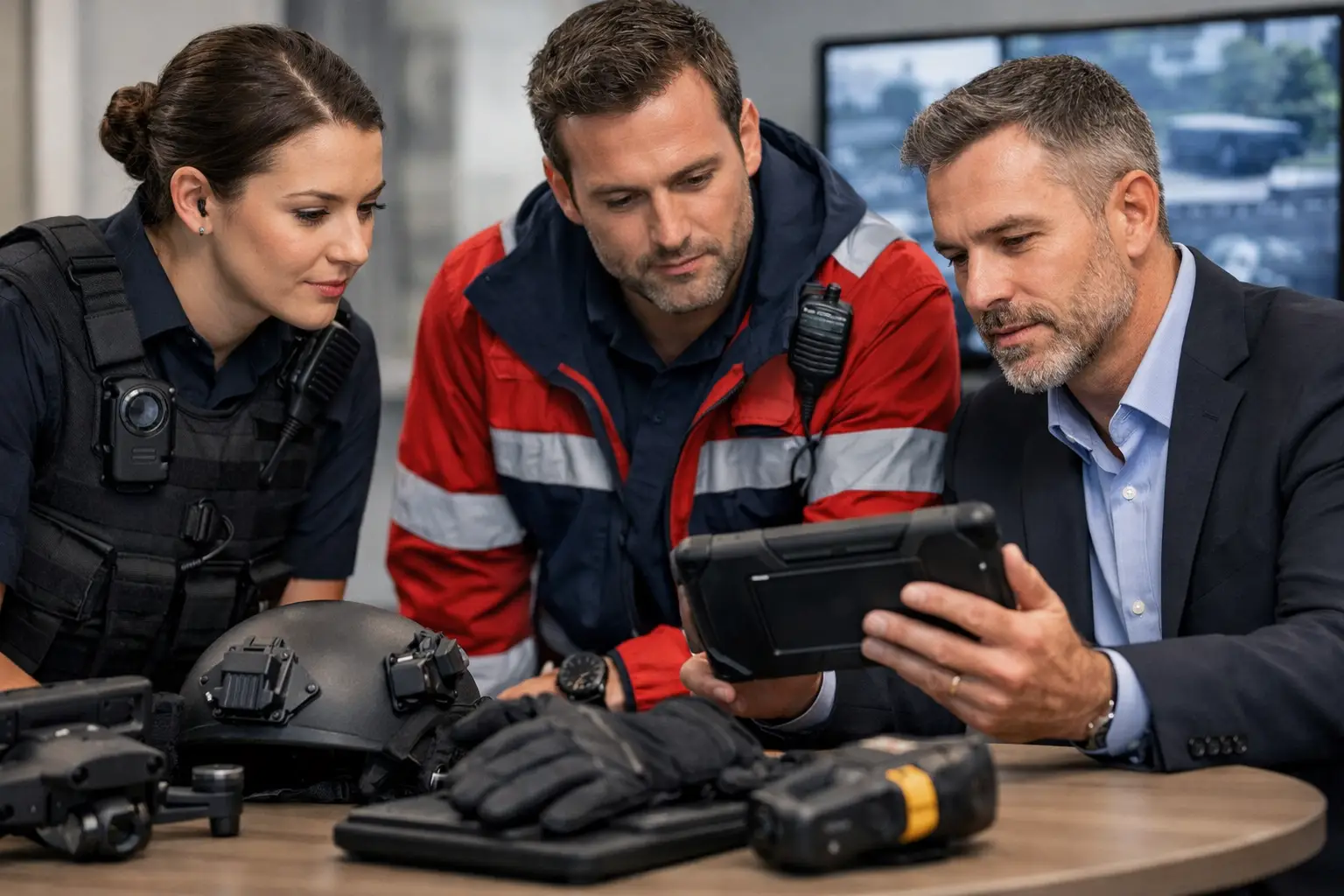
Drones, thermal cameras, perimeter sensors, and surveillance systems can give communities and response teams a critical advantage: earlier awareness. But early awareness only saves lives if there is a response protocol behind it.
A camera that detects movement is useful only if someone is monitoring it, knows what constitutes a credible concern, and can alert the appropriate team. A drone may provide a clearer view of terrain or an area of concern, but it requires trained operators, battery discipline, weather awareness, legal and operational coordination, and secure handling of the information it collects.
The most meaningful metric is not how sophisticated a system appears. It is whether it shortens the time between detection, verification, and action.
Training Is Part of the Technology
Technology does not arrive fully formed as protection. Training turns equipment into capability.
A protective technology review should include the learning curve from the beginning. How long does it take to train a new user? Can instruction be delivered quickly? Does the system require advanced expertise, or can a properly trained community security team operate it effectively? How often must skills be refreshed before they fade?
This is not an argument against advanced tools. High-capability systems can be decisive when they are placed with the right operators and supported by a clear implementation plan. It is an argument against separating procurement from readiness.
Training also protects the investment. Poor handling damages equipment, creates safety hazards, and reduces trust in tools that may be essential later. A disciplined deployment plan includes orientation, practice under realistic conditions, written procedures, responsibility for charging and maintenance, and a clear point of contact when something fails.
Accountability Means Following the Equipment to the Field
For supporters who give to strengthen Israel’s defenders and civilians, accountability should extend beyond the purchase order. The question is not simply, “Was this item bought?” It is, “Was it delivered where the need was identified, integrated into operations, and kept ready for use?”
That level of accountability requires close relationships with local partners, trusted vendors, medical and resiliency professionals, and teams that understand operational realities. It also requires speed without cutting corners. Urgent needs cannot wait for layers of bureaucracy, but urgency is not an excuse for weak vetting.
Israel Friends approaches this work through a direct model: identify the need, vet the solution, and deliver it to the people who need it. That approach recognizes a central truth of crisis response: the gap between need and delivery can be measured in lives, confidence, and the ability of a community to keep functioning after trauma.
A responsible review also measures what happens after delivery. Are batteries charged? Are protective items properly fitted? Are medical kits stocked? Is the camera system monitored? Are trained people available when an alert comes in? These details can sound routine, but routine is what makes protection dependable.
The Hidden Cost of Choosing the Wrong Tool
The lowest-priced option is not always the most economical, and the most expensive system is not automatically the strongest choice. The true cost includes acquisition, training, maintenance, replacement, consumables, repairs, and the operational time required to keep the equipment ready.
There is also an opportunity cost. Funds committed to an overbuilt system may not be available for immediate trauma supplies, basic protective equipment, or other urgent needs. Conversely, choosing only low-cost items can create a patchwork of gear that fails when teams need it most.
The right approach is proportionality. Match the solution to the risk, build in the support required to sustain it, and prioritize the capabilities that protect people now while strengthening long-term readiness.
Protection Is a Readiness Decision
A strong protective technology review does not chase trends or reward the most dramatic product demonstration. It examines whether a tool is fit for the mission, reliable under pressure, usable by the people receiving it, and supported after it reaches the field.
That standard gives donors something more meaningful than a receipt. It gives them a clear line between their support and a defender who can see in the dark, a responder who can treat trauma quickly, or a family protected by earlier warning.
When evaluating any protective need, ask the question that matters most: if the alert comes tonight, will this equipment be ready, and will someone know exactly how to use it?